

 Corrugated
 Cardboard
 Kraft
Kraft Rigid
Rigid Folding Carton Boxes
 Tuck End Boxes
 Auto Bottom Boxes
 Tuck Top Boxes
 Display Lid Boxes
 CBD Oil Boxes
 Hemp Oil Boxes
 CBD Tincture Boxes
 E-Liquid Boxes
 Vape Cartridge
 See all products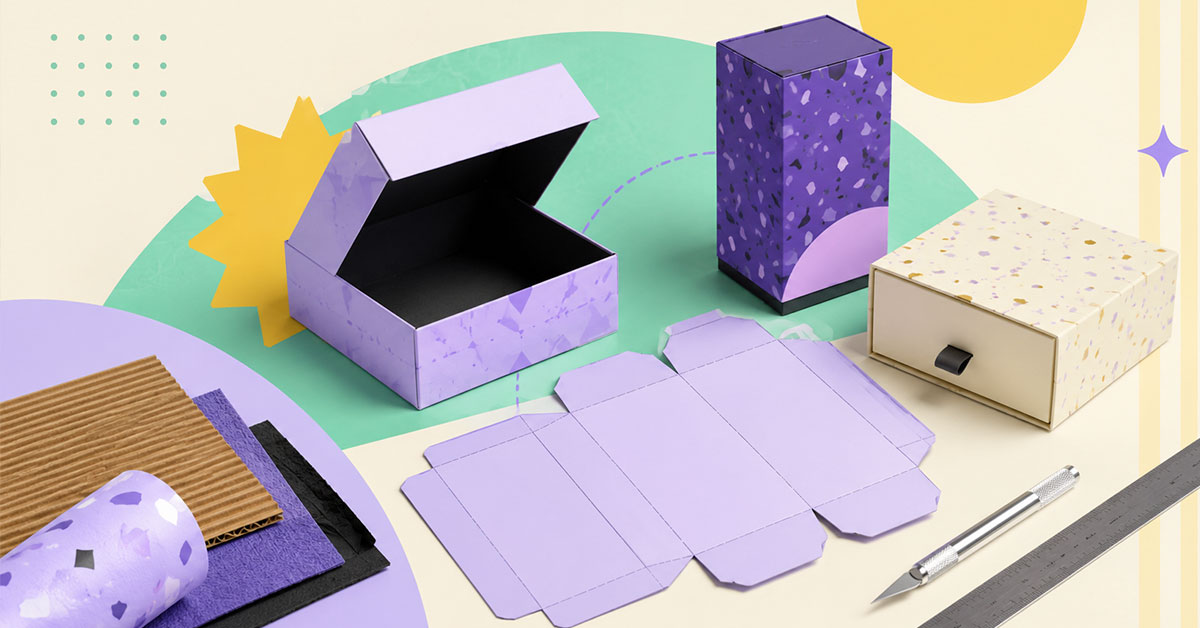
Custom packaging becomes confusing very quickly when every supplier promises premium quality but few buyers know which specifications actually matter.
If you get this decision wrong, the cost is rarely limited to the price of the box. You can end up paying for wasted space, extra void fill, repacking, damaged products or packaging that makes your brand look less considered than the product inside. For UK brands, startups and product teams that want to understand how custom packaging is created before ordering it, those small problems become much more noticeable when the same packaging decision is repeated every week.
This guide gives you a clear answer to “how to make custom packaging box” and then shows you how to make a better decision. You will learn where to source bespoke custom packaging boxes, how to compare suppliers, how to choose size and strength, when custom packaging is worth considering and which mistakes create unnecessary cost. You will also find direct question-and-answer sections written to make the key points easy to scan, quote and understand.
The direct answer
To make a custom packaging box, measure the product, choose a suitable structure and material, create a dieline, place the artwork, review a proof or prototype and then approve production. Commercial packaging should be tested with the real product before a large run is ordered.
The right source depends on whether you are dealing with new product launches, eCommerce packaging or retail boxes. A one-off buyer can prioritise convenience, while a business buying repeatedly should pay more attention to specification, consistency and total packing cost. That distinction is the foundation of the rest of this article.
How to identify the exact box you need before you start shopping
How to define the box job before you compare suppliers
Write down what is going inside the box, the packed weight, the internal dimensions you need and how the package will travel. Then identify the main job: protection, presentation, storage, shipping or a combination of these. This short brief prevents you from comparing boxes that happen to look similar but are designed for different purposes.
For repeat orders, include the expected monthly or quarterly quantity and whether different products can share one size. A useful specification should be clear enough that another member of your team could reorder the same box without guessing.
How to choose the right dimensions without paying for empty space
Start with the product at its widest points and measure length, width and height accurately. Add only the clearance needed for inserts, cushioning, tissue or multiple units. When checking whether a product will fit, use the internal box dimensions rather than assuming the listed external size is the usable space.
Oversized boxes increase movement and void fill, while boxes that are too tight can crush corners or put pressure on the contents. For eCommerce, a closer fit can also make the packing bench more consistent because staff do not have to improvise with large amounts of filler.
How to match board strength to the journey
A box is not strong simply because it feels thick in your hand. Strength depends on the board construction, panel size, product weight, stacking pressure, moisture exposure and the way the package is handled. Light retail cartons, corrugated mailers and double-wall shipping cases solve different problems.
If the product is heavy, fragile or expensive, describe the complete journey to the supplier instead of asking only for a ‘heavy-duty box’. The right answer may involve a stronger outer box, an insert, a divider or better internal restraint rather than simply adding more board everywhere.
If you are unsure whether the word cardboard in your search refers to lightweight carton board or a corrugated shipping case, read the PackagingX guide to cardboard and corrugated boxes before ordering. Knowing the material category makes every later conversation with a supplier clearer. It also reduces the risk of comparing visually similar boxes that have very different purposes.
Packaging decisions also sit inside a changing UK regulatory environment. GOV.UK guidance on packaging data for extended producer responsibility explains what affected organisations may need to collect and report. That makes accurate material and packaging records more useful for some businesses than treating every packaging purchase as an isolated order.
Businesses in England should also be aware of workplace recycling requirements. WRAP’s Business of Recycling guidance explains the separation of cardboard and paper within the newer workplace recycling framework. Operationally, flat-pack storage, easy breakdown and clearly understood disposal routes can make a packaging choice easier for staff to manage after use.
Where the best place to buy depends on urgency, quantity and purpose
When local retailers and trade counters are the better answer
Local sources are valuable when the requirement is immediate and the specification is simple. A removal shop, storage company or office supplier may be exactly right for a house move, archive project or one-off parcel. The trade-off is usually range and consistency rather than convenience.
Check whether the box size will still be available when you need to reorder. For a recurring business requirement, repeated substitution can create more operational cost than the first purchase suggests.
When online marketplaces make sense and what to verify
Marketplaces are useful for fast comparison across common sizes and small quantities. Read the full specification because terms such as strong, premium and heavy duty are not standard technical grades. Confirm internal dimensions, quantity per pack and whether the product is single-wall or double-wall corrugated when that distinction matters.
Look beyond the product image because a photograph cannot show how the box behaves under load. If the same packaging will be bought repeatedly, save the exact product reference instead of relying on a broad search each time.
When reused boxes are sensible and when they are not
A clean reused box can be perfectly adequate for moving, storage or a low-risk personal shipment. Inspect corners, seams and panels for crushing, moisture or previous damage. Remove old courier labels and barcodes before reuse so the new shipment is not confused during handling.
For customer-facing orders, food-contact situations or high-value products, a new box may provide better consistency and confidence. Reuse should be based on fitness for purpose rather than the assumption that every second-hand carton is automatically suitable.
Where specialist packaging suppliers add the most value
Specialist suppliers are useful when you need more than a generic box from a shelf. They can help with exact dimensions, board selection, recurring quantities, print and structural options. For a UK business, that can make procurement more repeatable and reduce the number of compromises made at the packing bench.
PackagingX provides custom cardboard boxes for businesses that need made-to-size or printed packaging rather than only stock cartons. Use a specialist when the box is part of the product experience or when failure would create a meaningful cost.
If your main requirement is specifically about buying custom packaging from the right supplier, the guide where to buy custom packaging boxes goes deeper into that decision. For buyers dealing with defining custom packaging and explaining its value, what is custom packaging boxes covers the related sourcing questions without repeating the same buying framework. Use those articles only when the situation matches your actual need.
How to compare boxes by fit, strength and total cost
How to compare stock packaging with custom packaging
Stock boxes are usually the fastest route when a standard size fits well and you do not need unique printing or structural features. They are practical for low volumes, changing product ranges and one-off requirements. Custom packaging becomes more attractive when dimensions are stable, order volumes repeat or the box itself influences protection and brand presentation.
A made-to-size box can reduce empty space and standardise the packing process, but it should solve a measurable problem rather than exist only because customisation sounds premium. The most economical choice is the one that performs reliably across product cost, packaging cost, packing time and damage risk.
How to compare supplier quotes fairly
A packaging quote is only useful when the specification behind the price is clear. Check dimensions, material, wall construction, quantity, print coverage, finishing, tooling, proofing and delivery. If two suppliers quote different prices for different specifications, you are not yet comparing like with like.
Ask how repeat orders are controlled and whether the approved artwork and structural reference are kept on file. Consistency is especially valuable when packaging is used by several staff members, fulfilment locations or retail partners.
How to test a box before committing to volume
Pack the real product using the real inserts, tape and protective materials. Lift it, stack it and open it as the customer would. If the box is for shipping, test the complete packed system rather than evaluating the empty carton on a desk.
Look for movement, crushed corners, awkward assembly, excessive tape use and weak closure points. A small trial can reveal problems that are invisible in a digital drawing and much cheaper to correct before a full production run.
How to build custom packaging that is easier to approve and reorder
How to turn a product into a packaging brief
A good custom packaging project starts with the product, not with a finish or print effect. Record the product dimensions, weight, fragility, orientation and any accessories that ship with it. Then define where the box will be seen and whether it is the primary retail package, the shipping package or both.
This brief gives the structural designer a real problem to solve. It also helps prevent expensive visual decisions being made before the basic fit and protection have been confirmed.
How to choose a structure that helps packing rather than slowing it down
The best structure should be easy to assemble, easy to fill and secure enough for its intended journey. Mailer boxes, tuck-end cartons, sleeves, two-piece boxes and corrugated shipping cases all create different packing workflows. A beautiful structure that takes too long to assemble can become expensive when hundreds of orders are packed each week.
Ask the people who actually pack orders to test prototypes where possible. Their feedback often identifies small changes that improve speed and reduce mistakes.
How to use a dieline without letting artwork break the structure
The dieline is the flat template that shows cut lines, crease lines, panels and glue areas. Artwork should be created on the approved dieline rather than on a guessed rectangle. Keep important text and logos away from folds, edges and closure points unless the design intentionally uses them.
Before production, review a proof for panel orientation, spelling, barcodes and mandatory product information where relevant. A structural change should trigger a fresh artwork check because even a small panel adjustment can move the print.
How to judge print quality without relying on buzzwords
Ask what print result is realistic on the chosen material and box construction. Colour appearance can vary by substrate, finish and printing process, so a digital screen is not a perfect representation of the final board. When brand colour is critical, discuss proofing and acceptable tolerances before the run.
Look for clean registration, readable small text and consistent placement across panels. Premium finishing should enhance the design, not distract from poor hierarchy or an overcrowded layout.
How to decide whether inserts are worth the extra complexity
Inserts can hold a product in position, separate multiple items and improve presentation. They are useful when movement creates damage risk or when the opening sequence is part of the customer experience. However, every insert adds material, assembly and cost, so it should have a clear function.
Test whether a simpler die-cut fit, folded platform or divider could achieve the same result. The best insert is usually the simplest one that protects and presents the product reliably.
PackagingX’s UK custom packaging guide provides broader background on bespoke packaging, while its custom cardboard box options show where exact sizing and print can be applied to a commercial box project. These links are most useful after you have defined the product and the job the package must do. A clear brief produces a more useful quote than beginning with a finish or colour alone.
How to apply this buying framework to learning the full custom packaging development process
Planning boxes for new product launches
When the requirement is new product launches, start by listing the risks that could make the packaging fail. These may include product movement, crushing, poor presentation, slow assembly, wasted storage space or an awkward opening experience. Rank the risks by cost and likelihood before deciding which box features are essential.
For new product launches, compare at least one convenient stock option with one more specialised option when the requirement is recurring. That comparison shows whether exact sizing, stronger board or print adds enough value to justify the change. Keep the decision tied to real use rather than assuming a more expensive box is automatically better.
Planning boxes for eCommerce packaging
When the requirement is eCommerce packaging, start by listing the risks that could make the packaging fail. These may include product movement, crushing, poor presentation, slow assembly, wasted storage space or an awkward opening experience. Rank the risks by cost and likelihood before deciding which box features are essential.
For eCommerce packaging, compare at least one convenient stock option with one more specialised option when the requirement is recurring. That comparison shows whether exact sizing, stronger board or print adds enough value to justify the change. Keep the decision tied to real use rather than assuming a more expensive box is automatically better.
Planning boxes for retail boxes
When the requirement is retail boxes, start by listing the risks that could make the packaging fail. These may include product movement, crushing, poor presentation, slow assembly, wasted storage space or an awkward opening experience. Rank the risks by cost and likelihood before deciding which box features are essential.
For retail boxes, compare at least one convenient stock option with one more specialised option when the requirement is recurring. That comparison shows whether exact sizing, stronger board or print adds enough value to justify the change. Keep the decision tied to real use rather than assuming a more expensive box is automatically better.
Planning boxes for gift packaging
When the requirement is gift packaging, start by listing the risks that could make the packaging fail. These may include product movement, crushing, poor presentation, slow assembly, wasted storage space or an awkward opening experience. Rank the risks by cost and likelihood before deciding which box features are essential.
For gift packaging, compare at least one convenient stock option with one more specialised option when the requirement is recurring. That comparison shows whether exact sizing, stronger board or print adds enough value to justify the change. Keep the decision tied to real use rather than assuming a more expensive box is automatically better.
Planning boxes for cosmetics
When the requirement is cosmetics, start by listing the risks that could make the packaging fail. These may include product movement, crushing, poor presentation, slow assembly, wasted storage space or an awkward opening experience. Rank the risks by cost and likelihood before deciding which box features are essential.
For cosmetics, compare at least one convenient stock option with one more specialised option when the requirement is recurring. That comparison shows whether exact sizing, stronger board or print adds enough value to justify the change. Keep the decision tied to real use rather than assuming a more expensive box is automatically better.
Questions people ask before buying or ordering boxes
What is the simplest answer to ‘how to make custom packaging box’?
To make a custom packaging box, measure the product, choose a suitable structure and material, create a dieline, place the artwork, review a proof or prototype and then approve production. Commercial packaging should be tested with the real product before a large run is ordered.
What type of box is best for new product launches?
For new product launches, choose the box according to product dimensions, packed weight, fragility and handling. A stock box works when the fit is good, while a custom format becomes more useful for repeated orders or unusual products.
Where should I buy boxes for eCommerce packaging?
For eCommerce packaging, compare a specialist packaging supplier with the fastest convenient local source. Use the specialist when you need consistent dimensions, stronger materials, print or repeat supply.
How do I compare two packaging quotes fairly?
Make sure both quotes cover the same dimensions, material, quantity, printing, finishing, tooling, proofing and delivery. If one specification is vague, ask for clarification before treating the lower figure as a saving.
Is it cheaper to buy boxes online or locally?
For one or two boxes needed immediately, a local source can be the most convenient option. For planned or repeat orders, online packaging suppliers often provide more sizes and clearer quantity pricing, so compare the delivered cost rather than the unit price alone.
Can I use any cardboard box for shipping?
No. The box must be strong enough for the packed weight and handling conditions. Corrugated boxes are commonly used for transit because the fluted structure provides more rigidity than lightweight folding carton board.
How do I know what box size I need?
Measure the product and everything that will sit inside the box, then allow only the clearance needed for safe packing. Use internal dimensions when checking fit, because external dimensions include the thickness of the board.
Are bigger boxes automatically stronger?
No. A larger box can actually need stronger construction because its panels span a greater area. Strength depends on material and design, not simply on overall size.
Should I choose single-wall or double-wall corrugated boxes?
Single-wall board suits many lighter products and everyday shipments. Double-wall construction is often considered for heavier, fragile or more demanding loads, but the final choice should reflect weight, size, stacking and transport conditions.
Can small businesses order custom printed boxes?
Yes. Custom packaging is not limited to large brands, although practical order quantities and pricing vary by supplier. Small businesses should compare the value of exact sizing and branding against the flexibility of stock boxes.
What should I ask before ordering custom boxes?
Ask for the internal dimensions, material, structural style, quantity, print specification, proofing method, finishing, delivery and lead time. Make sure the final approved specification is recorded for future reorders.
What makes a box high quality?
A high-quality box is accurately made, suitable for the product and consistent from one unit to the next. Good print and finishing matter for presentation, but they cannot compensate for poor fit or inadequate protection.
Can reused cardboard boxes be shipped again?
Yes, if they are clean, dry and structurally sound. Remove or cover old labels and make sure the seams and corners have not been weakened by the previous journey.
How can I reduce packaging waste?
Choose a size that fits the product closely, avoid unnecessary layers and standardise packaging where several products can safely share one format. Also consider how easily the materials can be separated and recycled after use.
Do custom boxes improve branding?
They can improve consistency because the structure, colours and print can be designed around the brand. The strongest result comes when the branded box is also easy to pack and performs well during handling.
How far ahead should I order custom packaging?
Allow time for specification, artwork, proofing, production and delivery. New projects need more time than repeat orders because dimensions or artwork may require revisions before approval.
Buyers who need a deeper explanation of online custom box printing workflows can continue with where to print custom packaging boxes online. That article takes a different search intent, so the link is useful only when your requirement overlaps with that specific problem. Keeping each question tied to a distinct decision helps prevent a large content cluster from becoming repetitive.
A practical buying scenario for new product launches
Imagine a buyer searching for how to make custom packaging box because they need packaging for new product launches. The fastest search result may provide a usable box, but a repeat buyer should pause long enough to define the packed item, internal size and expected quantity. That information turns a vague shopping task into a specification.
Next, compare what happens after the box arrives. Ask how long it takes to assemble, how much filler is needed, whether the product moves and how the package looks after handling. These observations reveal costs that are invisible in a simple price-per-box comparison.
For new product launches, keep a short record of the box reference, supplier, material and any problems found during use. If the same problem appears repeatedly, that is a stronger reason to change the specification than a general desire for something more premium. Packaging improvements are most valuable when they remove a recurring source of waste, damage or inconsistency.
A practical buying scenario for eCommerce packaging
Imagine a buyer searching for custom box design because they need packaging for eCommerce packaging. The fastest search result may provide a usable box, but a repeat buyer should pause long enough to define the packed item, internal size and expected quantity. That information turns a vague shopping task into a specification.
Next, compare what happens after the box arrives. Ask how long it takes to assemble, how much filler is needed, whether the product moves and how the package looks after handling. These observations reveal costs that are invisible in a simple price-per-box comparison.
For eCommerce packaging, keep a short record of the box reference, supplier, material and any problems found during use. If the same problem appears repeatedly, that is a stronger reason to change the specification than a general desire for something more premium. Packaging improvements are most valuable when they remove a recurring source of waste, damage or inconsistency.
A practical buying scenario for retail boxes
Imagine a buyer searching for packaging dieline because they need packaging for retail boxes. The fastest search result may provide a usable box, but a repeat buyer should pause long enough to define the packed item, internal size and expected quantity. That information turns a vague shopping task into a specification.
Next, compare what happens after the box arrives. Ask how long it takes to assemble, how much filler is needed, whether the product moves and how the package looks after handling. These observations reveal costs that are invisible in a simple price-per-box comparison.
For retail boxes, keep a short record of the box reference, supplier, material and any problems found during use. If the same problem appears repeatedly, that is a stronger reason to change the specification than a general desire for something more premium. Packaging improvements are most valuable when they remove a recurring source of waste, damage or inconsistency.
A practical buying scenario for gift packaging
Imagine a buyer searching for bespoke packaging UK because they need packaging for gift packaging. The fastest search result may provide a usable box, but a repeat buyer should pause long enough to define the packed item, internal size and expected quantity. That information turns a vague shopping task into a specification.
Next, compare what happens after the box arrives. Ask how long it takes to assemble, how much filler is needed, whether the product moves and how the package looks after handling. These observations reveal costs that are invisible in a simple price-per-box comparison.
For gift packaging, keep a short record of the box reference, supplier, material and any problems found during use. If the same problem appears repeatedly, that is a stronger reason to change the specification than a general desire for something more premium. Packaging improvements are most valuable when they remove a recurring source of waste, damage or inconsistency.
A practical buying scenario for cosmetics
Imagine a buyer searching for custom printed boxes because they need packaging for cosmetics. The fastest search result may provide a usable box, but a repeat buyer should pause long enough to define the packed item, internal size and expected quantity. That information turns a vague shopping task into a specification.
Next, compare what happens after the box arrives. Ask how long it takes to assemble, how much filler is needed, whether the product moves and how the package looks after handling. These observations reveal costs that are invisible in a simple price-per-box comparison.
For cosmetics, keep a short record of the box reference, supplier, material and any problems found during use. If the same problem appears repeatedly, that is a stronger reason to change the specification than a general desire for something more premium. Packaging improvements are most valuable when they remove a recurring source of waste, damage or inconsistency.
A practical buying scenario for subscription products
Imagine a buyer searching for packaging prototype because they need packaging for subscription products. The fastest search result may provide a usable box, but a repeat buyer should pause long enough to define the packed item, internal size and expected quantity. That information turns a vague shopping task into a specification.
Next, compare what happens after the box arrives. Ask how long it takes to assemble, how much filler is needed, whether the product moves and how the package looks after handling. These observations reveal costs that are invisible in a simple price-per-box comparison.
For subscription products, keep a short record of the box reference, supplier, material and any problems found during use. If the same problem appears repeatedly, that is a stronger reason to change the specification than a general desire for something more premium. Packaging improvements are most valuable when they remove a recurring source of waste, damage or inconsistency.
How to turn all this information into one practical packaging decision
Knowing every possible box type is not useful if you still do not know what to order. The pivot is simple: reduce the decision to product, journey, quantity and presentation. Those four inputs will eliminate most unsuitable options before price even enters the conversation.
Start with a box that protects the product and fits the real packing process. Then improve cost, storage and branding without weakening that core function. If the body of this guide felt detailed, remember that you do not need to optimise every variable on the first attempt.
For a one-off need, choose a sound stock box from a convenient source and move on. For a recurring business requirement, document the specification, test it and refine it after real use. For a brand-critical product, involve a packaging specialist early enough to test structure and artwork before the launch date.
If you are still deciding between a standard box and a bespoke format, ask one question: what recurring problem would custom packaging solve? If the answer is better fit, lower void fill, stronger protection, faster packing or more consistent presentation, the custom route has a clear purpose. If there is no clear problem to solve, a well-chosen stock box may be the more sensible purchase.
The one thing to remember
The best answer to “how to make custom packaging box” is to buy from the source that can provide the right fit, strength and consistency for the job—not simply the first place that sells a box.
For UK businesses that need made-to-size or printed packaging, the next step is to define your product dimensions, quantity and intended use before requesting a quote. That gives the supplier enough information to recommend a relevant structure instead of guessing from a generic enquiry. Keep the brief simple and specific.