

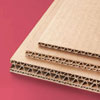
 Corrugated
 Cardboard
 Kraft
Kraft Rigid
Rigid Folding Carton Boxes
 Tuck End Boxes
 Auto Bottom Boxes
 Tuck Top Boxes
 Display Lid Boxes
 CBD Oil Boxes
 Hemp Oil Boxes
 CBD Tincture Boxes
 E-Liquid Boxes
 Vape Cartridge
 See all products
Let me guess.
You’ve been burned by a packaging supplier before.
Maybe the boxes arrived and they were weaker than you expected. Maybe the print quality was nothing like the mockup. Maybe the lead time was longer than promised and you missed a product launch. Or maybe the boxes were just the wrong size and your products were rattling around inside during delivery.
If any of those sound familiar, you’re not alone. These are the most common packaging complaints businesses have and almost all of them come down to one thing: choosing the wrong manufacturer.
Here’s the reality. According to Smithers Pira, the global packaging industry is worth over $900 billion and yet most businesses still choose a packaging supplier based almost entirely on price. That single decision causes more packaging problems than almost anything else.
The right corrugated box manufacturer doesn’t just make boxes. They help you choose the right size, the right material strength, the right printing options, and the right structure for your specific product. And that difference between a supplier and a genuine packaging partner is what separates brands that have packaging problems from brands that don’t.
In this guide, we’re going to walk through exactly how to choose the right corrugated box manufacturer, what to check before you order, and the questions you need to ask before committing to anything.
Let’s get into it.
Quick Answer: How Do You Choose a Corrugated Box Manufacturer?
Look for a manufacturer that offers custom sizing, suitable material strength, printing options, design support, clear pricing, realistic lead times, and honest communication. The best manufacturer should help you choose packaging based on your product size, weight, shipping method, and branding needs not just hand you a standard box and take your money.
For packaging built specifically around your product, explore custom corrugated boxes from PackagingX.
Why Choosing the Right Manufacturer Matters
Poor packaging is expensive. Not just in the obvious way the cost of the boxes themselves. But in all the downstream costs that stack up when the packaging fails.
Damaged products need to be replaced. Returns cost money to process. Bad reviews cost you future customers. Extra filling material adds cost to every order. And a poor unboxing experience affects how customers perceive your brand sometimes permanently.
On the other side, the right packaging protects your products, reduces returns, improves brand presentation, and makes the customer experience feel intentional and professional.
Here’s a practical example. A lightweight clothing item may only need a simple mailer box. But a glass candle, food jar, or cosmetic bottle needs stronger corrugated board and proper inserts. A good manufacturer identifies that difference before production starts. A bad one hands you whatever they have in stock and hopes for the best.
The manufacturer you choose directly affects the quality of your packaging. And the quality of your packaging directly affects your customer experience, your return rate, and your brand reputation.
1. Check If They Offer Custom Sizes
The first thing to check is simple. Can they make a box that actually fits your product?
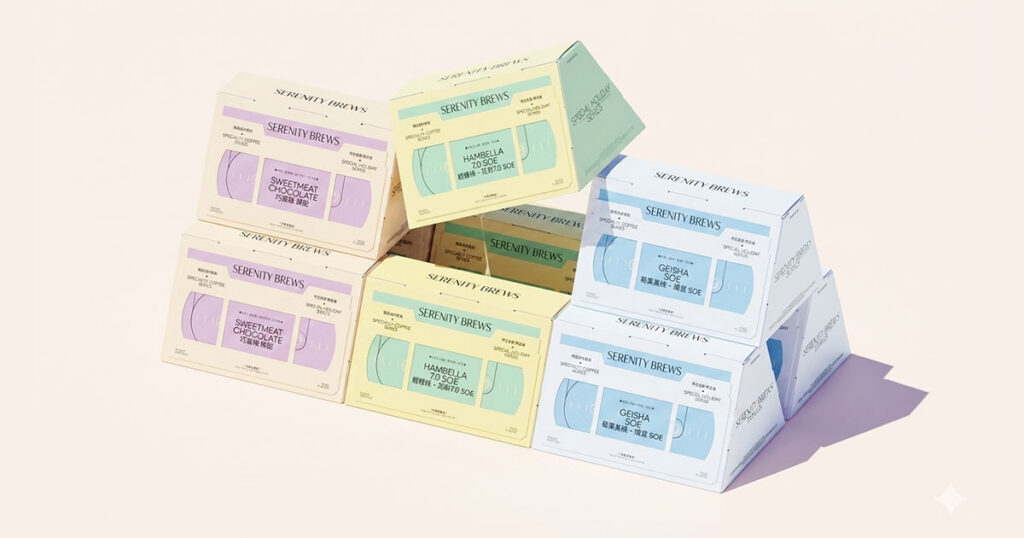
Standard boxes work for very basic shipping needs. But if your product doesn’t fit a standard size properly and most products don’t you end up with a box that’s either too large or too small. Both create problems.
A box that’s too large means the product moves around during transit. Movement causes damage. A box that’s too small means inadequate protection and a product that looks like it was crammed in as an afterthought.
Custom sizing fixes both problems. It reduces empty space, cuts the need for excessive void fill, improves product protection, lowers packaging waste, creates a cleaner presentation, and makes shipping more efficient.
A good manufacturer should ask for your product dimensions and recommend the right box size based on how the product will be packed including any inserts or protective material that needs to fit inside alongside the product.
For more detail on getting sizing right, read our guide on how to choose the right corrugated box.
2. Check the Material Options
Not all corrugated boxes are made equal. Different products genuinely need different material strengths and a good manufacturer knows that.
Common options include:
- Single wall corrugated board
- Double wall corrugated board
- Kraft corrugated board
- White corrugated board
- Printed corrugated board
- Corrugated board with inserts or dividers
Single wall corrugated boxes are suitable for lighter, non-fragile products. Double wall corrugated boxes are built for heavier, fragile, or high-value items that need more structural support.
Here’s a red flag worth knowing. If a manufacturer gives every single product the same material recommendation regardless of weight, fragility, or shipping method that’s not a good sign. Packaging should be chosen based on the product. Not guessed.
Before placing any order, read our guide on single wall vs double wall corrugated boxes so you can have an informed conversation with any supplier you’re considering.
3.Ask About Box Strength
Material type and box strength are related but not identical. A good corrugated box manufacturer should ask you specific questions about how your product will be handled before making any strength recommendation.
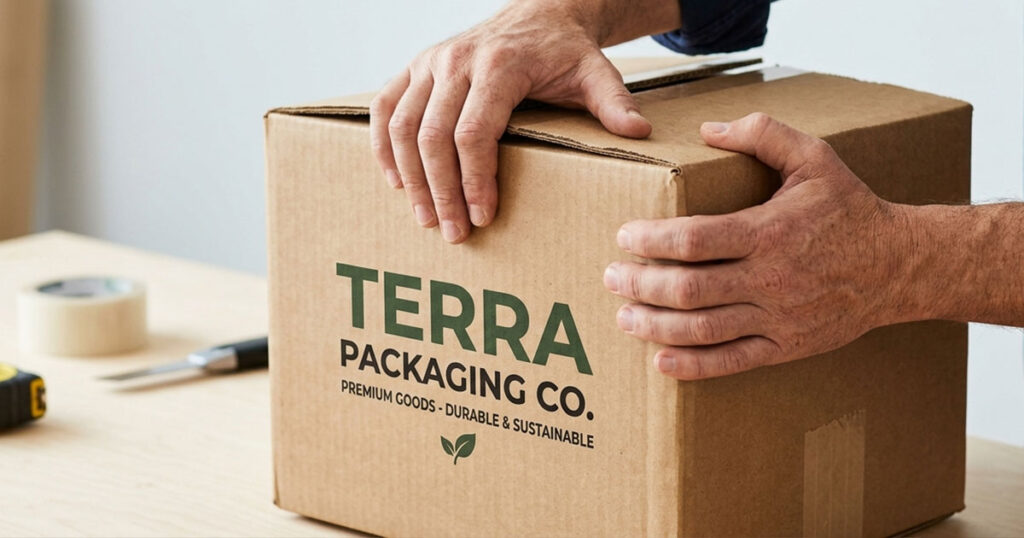
A good corrugated box manufacturer should ask questions like:
- What is the product weight?
- Is the product fragile?
- Will the box be shipped?
- Will the boxes be stacked?
- Will the product need inserts?
- Is the product high-value?
- Is the packaging for retail or ecommerce?
If a supplier doesn’t ask these questions, they’re not choosing the right box for your product they’re choosing whatever is easiest for them to produce.
For lightweight products, single wall may be enough. For anything heavier, fragile, or high-value, double wall or stronger board is almost always the safer choice. And for products going through courier networks, remember that shipping boxes may be moved, stacked, dropped, and handled multiple times before they reach your customer.
For shipping-specific guidance, read our guide on corrugated shipping boxes.
4 . Look at Their Printing and Branding Capabilities
If your packaging reaches customers directly and for most ecommerce and retail brands it does printing matters. A plain box protects the product. A printed box protects the product and builds your brand at the same time.
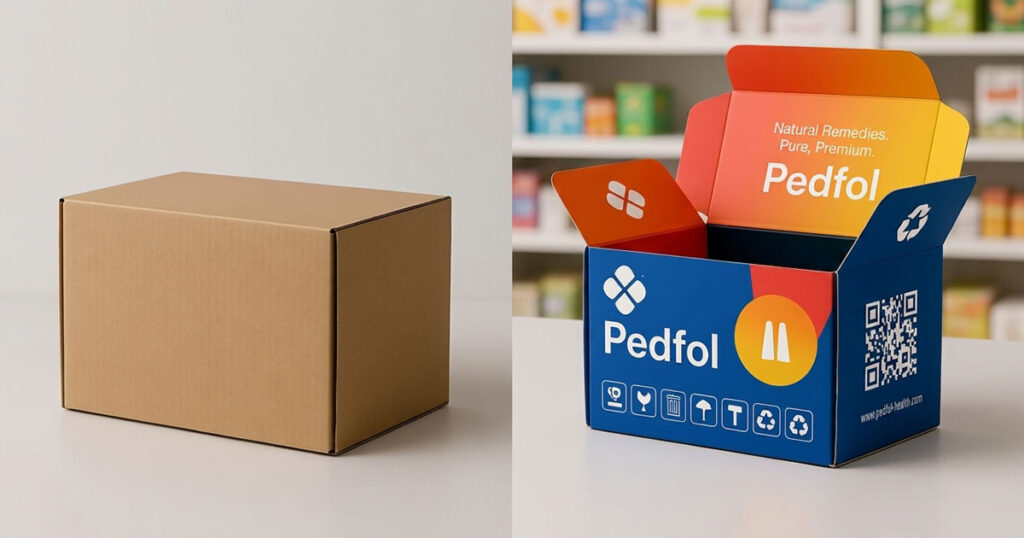
A good manufacturer should offer printing options such as:
- Logo printing
- Brand colours
- Product details
- QR codes
- Website and social media handles
- Handling instructions
- Recycling messages
- Inside printing
- Full-colour artwork
For ecommerce brands, even a simple one-color logo print makes a meaningful difference to the unboxing experience. For retail products, full-color printing can be the difference between a product that catches the eye and one that disappears on the shelf.
Before committing to a supplier, ask whether they can support your artwork files, provide dielines, match your brand colors, and confirm where print elements will be placed on the finished box.
For design and branding ideas, read our guide on printed corrugated boxes.
5. Ask If They Provide Design Support
Not every business has print-ready packaging artwork or a technical dieline sitting ready to go. That’s completely normal especially if you’re ordering custom packaging for the first time.
A good corrugated box manufacturer should be able to help with:
- Box style selection
- Dieline setup
- Artwork placement
- Logo positioning
- Printing guidance
- Insert design
- Box structure
- Finishing suggestions
This is where a lot of businesses get caught out. They assume they need to bring everything to the manufacturer ready-made. In reality, a good packaging supplier should guide you through the process not just wait for perfect files to arrive before they do anything.
If a manufacturer can’t provide any design support and expects you to know every technical detail upfront, that’s a sign they’re more of a production facility than a packaging partner.
6. Check the Range of Packaging Styles They Offer
A strong corrugated box manufacturer should offer more than one or two basic box types. Different products need different packaging structures and a supplier with a limited range will try to fit your product into whatever they happen to make.
Useful corrugated packaging styles include:
- Mailer boxes
- Shipping boxes
- Postage boxes
- Display boxes
- Food boxes
- Gift boxes
- Subscription boxes
- Boxes with inserts
- Storage boxes
- Retail boxes
The right packaging depends on how your products are sold and delivered. If you run an ecommerce brand, custom mailer boxes are a practical choice because they protect the product while giving customers a better unboxing experience. For heavier or more delicate deliveries, corrugated mailer boxes can offer extra strength without making the packaging feel bulky.
Retail brands usually need packaging that looks good on shelves as well as protects the product. In that case, display boxes or retail packaging styles can help present your products more clearly and make them easier for customers to notice.
Food businesses often have different needs, especially when freshness, presentation, and product safety matter. That’s where custom food packaging boxes can be a better fit, as they can be designed around the type of food, portion size, and how the product will be handled.
The broader their range, the more likely they can build packaging that actually suits your product rather than something close enough that you settle for.
7. Check If They Offer Inserts and Dividers
Inserts are one of those things businesses often overlook until a fragile product arrives damaged for the first time. Then they become very important very quickly.
Inserts and dividers stop products from moving inside the box during transit. They also make the packaging look significantly more organized and premium when the customer opens it.
Inserts are useful for:
- Candles
- Bottles
- Glass jars
- Cosmetics
- Gift sets
- Electronics
- Food jars
- Subscription boxes
- Multiple products in one box
A good manufacturer should be honest about when inserts are genuinely necessary and when they’re not. You don’t want to pay for inserts your product doesn’t need. But for fragile or high-value items, the cost of inserts is almost always less than the cost of a single damaged product and the returns process that follows.
For fragile or multi-item products, mailer boxes with inserts are worth building into your packaging from the start.
8. Compare Pricing — But Do It Properly
Price matters. Nobody’s pretending it doesn’t. But choosing a manufacturer purely on price is one of the most expensive mistakes a business can make in packaging.
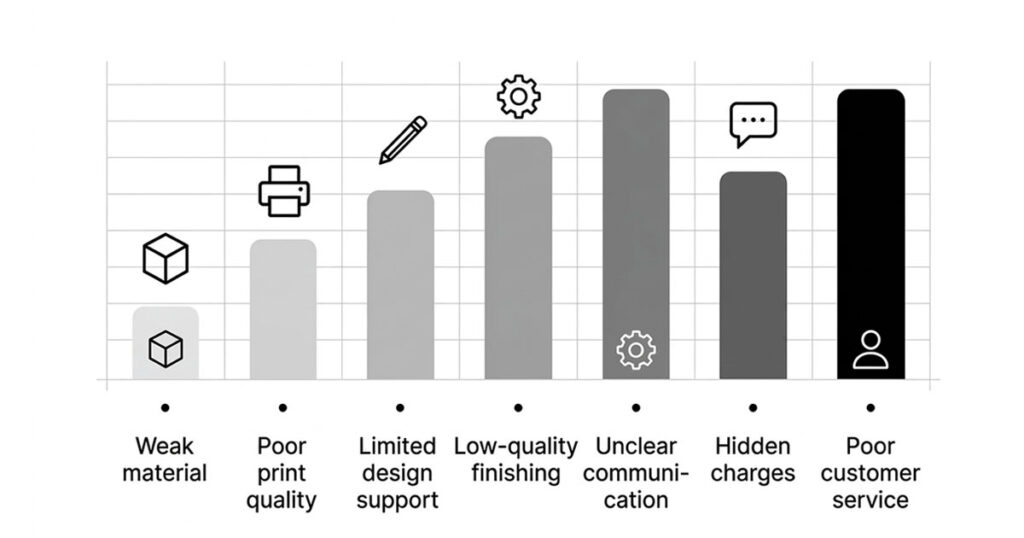
A very low price may mean:
- Weak material
- Poor print quality
- Limited design support
- Low-quality finishing
- Unclear communication
- Hidden charges
- Poor customer service
- Longer delays
When comparing quotes, check what is included.
Ask about:
- Box size
- Material strength
- Printing
- Number of colours
- Inserts
- Finishing
- Delivery
- Setup charges
- Minimum order quantity
- Turnaround time
A slightly higher price from a manufacturer who communicates clearly, uses the right materials, and delivers on time is almost always better value than the cheapest quote from a supplier who leaves you with packaging that fails.
9. Ask About Minimum Order Quantity
Minimum order quantity or MOQ is the smallest number of boxes a manufacturer will produce for a custom order. It varies significantly between suppliers, and it directly affects how you plan your packaging budget.
Before ordering, ask:
- What is the minimum order quantity?
- Does the price reduce with bulk orders?
- Can I reorder the same design later?
- Is there a setup cost?
- Can I test a smaller quantity first?
- How much storage space will I need?
Bulk orders usually reduce the cost per box but they also require more storage space and more upfront investment. If your product design might change soon, or if you’re still testing a new product line, ordering the maximum quantity to get the lowest unit price may not actually be the smartest move.
For a full breakdown of how wholesale pricing works, read our guide on custom corrugated boxes wholesale.
10. Check Turnaround Time Before You Commit
Custom corrugated boxes don’t get made overnight. The production process involves design approval, artwork setup, material preparation, printing, cutting, creasing, folding, gluing, finishing, quality checking, packing, and delivery.
That takes time and rushing any part of it can compromise the final result.
A good manufacturer should give you a clear, realistic timeline before production starts. Not a vague estimate designed to win the order.
Ask about:
- Design approval time
- Artwork setup
- Production time
- Printing time
- Delivery time
- Rush order options
- Possible delays
Then plan around that timeline not around a best-case scenario.
Don’t leave packaging until the week before a product launch, a seasonal sale, or a retail deadline. Order early, build in a buffer, and avoid the unnecessary stress and extra cost that comes with rush orders.
11. Ask About Recyclable Packaging Options
Sustainability is no longer just a nice-to-have for UK businesses. Customers are paying close attention to packaging waste and brands that make it easy for customers to recycle their packaging are increasingly preferred.
A good corrugated box manufacturer should be able to help you choose packaging that is both practical and recyclable.
Ask about:
- Recyclable corrugated board
- Paper-based inserts
- Kraft material
- Simple printing options
- Recycling messages
- Reducing unnecessary material
- Avoiding excessive coatings
For a full guide on this topic, read our article on are corrugated boxes recyclable.
12. Check Communication and Support
Here’s something most businesses don’t think to assess until they’re already having a problem with a supplier.
Good communication in the early stages of working with a packaging manufacturer is one of the strongest indicators of how the relationship will go when something goes wrong and in manufacturing, something will occasionally go wrong.
Good signs include:
- Clear answers
- Helpful recommendations
- Fast responses
- Simple quoting process
- Honest timelines
- Practical advice
- Proper artwork guidance
- No pressure selling
Bad signs include:
- Vague pricing
- Slow replies
- No material guidance
- No design support
- Unclear lead times
- Poor product understanding
- Pushy sales approach
Packaging is important to your business. You should feel confident and well-informed before placing the order not pressured, confused, or waiting days for a basic question to be answered.
13. Ask for Clear Artwork Requirements
If you want printed corrugated boxes, artwork setup is important.
Before sending your design, ask the manufacturer:
- What file format do you need?
- Do you provide the dieline?
- What is the safe area?
- Do you need vector artwork?
- Can you check the design before printing?
- Can you help with artwork placement?
- Are colours matched exactly or approximately?
- Can I print inside the box?
This helps avoid mistakes before production starts.
A simple spelling mistake, blurry logo, or wrong artwork size can become a costly problem once boxes are printed.
Questions to Ask Before Choosing a Manufacturer
Before committing to any corrugated box manufacturer, run through these questions.
- Can you make custom corrugated boxes in my required size?
- Which material strength do you recommend for my product?
- Should I choose single wall or double wall board?
- Can you print my logo and brand colours?
- Do you offer inside printing?
- Can you help with dieline and artwork setup?
- Do you offer inserts or dividers?
- What is the minimum order quantity?
- What is the production timeline?
- What affects the final cost?
- Are recyclable options available?
- Can the boxes be delivered flat-packed?
- Can I reorder the same box later?
The answers to these questions will tell you everything you need to know about whether a manufacturer is the right fit for your business.
Common Mistakes to Avoid
Here are some mistakes businesses should avoid when choosing a corrugated box manufacturer.
1. Choosing only by price
The cheapest box may not protect your product properly. Always compare quality, material, printing, and support.
2. Not checking material strength
A box may look good but still be too weak for shipping or stacking.
3. Ignoring product size
Wrong box size can lead to product movement, damage, and wasted space.
4. Forgetting inserts
Fragile products often need internal support, not just a strong outer box.
5. Not asking about lead time
Custom boxes take time. Order early to avoid delays.
6. Sending poor artwork
Low-quality artwork can lead to poor print results. Always check file quality before production.
7. Using one box for every product
Different products need different box sizes, strengths, and structures.
Why Work With a UK Corrugated Box Manufacturer?
Working with a UK-focused corrugated box manufacturer can be helpful because they understand local business needs, delivery expectations, and packaging requirements.
Benefits can include:
- Better communication
- Faster support
- UK-focused packaging advice
- Easier delivery coordination
- More relevant product recommendations
- Clearer understanding of UK business needs
For businesses selling in the UK, this can make the packaging process easier and more practical.
Manufacturer, Supplier or Broker: Know Who You Are Really Working With
Not every company selling corrugated boxes is actually manufacturing them.
Some businesses are true manufacturers. Some are suppliers who outsource production. Some are brokers who take your order and pass it to another factory.
None of these models is automatically bad. But you need to know who is responsible for your order before you commit.
A direct manufacturer usually has more control over material selection, production timing, quality checks, and technical advice. A supplier or broker may still be useful if they have strong relationships and good service, but delays and mistakes can become harder to solve if your order is being passed through several hands.
Before placing an order, ask one simple question:
Do you manufacture the boxes yourself, or do you outsource production?
The answer matters because it affects:
- How quickly problems can be fixed
- How accurate production timelines are
- How much control they have over material quality
- How flexible they can be with custom sizes
- How easily they can check artwork and dielines
- How clearly they can explain technical packaging choices
If a company is outsourcing production, ask how they manage quality control and communication with the factory. If they cannot explain that clearly, be careful.
For businesses that need repeat orders, seasonal packaging, or product launch packaging, working with a manufacturer that gives clear technical support is usually safer.
Ask for Samples or a Prototype Before Bulk Production
A mockup looks good on screen, but packaging needs to work in the real world.
Before ordering a large quantity, ask whether the manufacturer can provide a sample, prototype, or production proof. This helps you check the size, structure, opening style, print position, material feel, and product fit before the full order is made.
A sample can help you test:
- Whether the product fits properly
- Whether the box is easy to assemble
- Whether inserts hold the product securely
- Whether the board strength feels right
- Whether the print position looks correct
- Whether the customer opening experience feels good
- Whether the box works for storage and fulfilment
This is especially important for fragile products, subscription boxes, retail displays, food packaging, and printed ecommerce packaging.
Skipping samples may save a little time at the start, but it can create expensive problems later. If the box arrives too tight, too weak, too large, or difficult to assemble, you may be stuck with hundreds or thousands of unusable boxes.
For first-time custom packaging orders, a sample is usually worth it.
Check Their Quality Control Process
Quality control is not just about checking whether the boxes look nice.
A good corrugated box manufacturer should have a process for checking the finished boxes before they are packed and delivered.
Quality checks can include:
- Box dimensions
- Board strength
- Print alignment
- Colour consistency
- Cutting and creasing accuracy
- Glue strength
- Folding performance
- Insert fit
- Surface finish
- Packing condition before dispatch
This matters because small production issues can become big operational problems.
For example, if the crease line is slightly wrong, the box may not fold properly. If the glue is weak, the box may open during handling. If the insert is slightly loose, the product may move during delivery. If the print is misaligned, the packaging can look unprofessional.
Ask the manufacturer how they check orders before shipping. You do not need a technical report for every small order, but you do need confidence that someone is checking the basics.
Understand Tolerances Before You Approve Production
Custom packaging is manufactured, not magically cloned.
That means there can be small production tolerances in cutting, folding, colour, and finishing. A professional manufacturer should explain what is realistic before production starts.
This is especially important if your product fit is very tight or the design depends on exact print placement.
Ask about:
- Size tolerances
- Print movement tolerance
- Colour variation between batches
- Board thickness variation
- Finishing variation
- Repeat order consistency
This does not mean you should accept poor production. It means you should understand what level of variation is normal and what counts as a fault.
If you are ordering packaging for a product that needs an exact fit, share the actual product sample or very accurate measurements. Guessing measurements from a website listing or old product file can lead to fit problems.
A good manufacturer will help you avoid this before the box goes into production.
Check Whether They Understand Fulfilment and Packing Speed
The best box is not only the one that looks good. It also needs to work for the people packing your orders.
If your team packs dozens or hundreds of orders a day, box assembly speed matters. A box that takes too long to fold, close, or secure can slow down fulfilment and increase labour costs.
Before choosing a box style, think about:
- How quickly the box can be assembled
- Whether staff need tape or glue
- Whether inserts slow down packing
- Whether the product is easy to place inside
- Whether the closure feels secure
- Whether the box stacks neatly after packing
- Whether it works with your shipping labels
This is where a good manufacturer can save you time. They should recommend a box style that suits both your product and your packing process.
For ecommerce brands, mailer boxes may improve unboxing, but they should still be quick to assemble. For wholesale shipping, a simpler shipping carton may be faster and more practical. For retail products, presentation may be more important than packing speed.
There is no single best structure. The right structure depends on how your business operates.
Look at Storage and Delivery Practicalities
Custom corrugated boxes often arrive flat-packed, but they still take space.
Before placing a large order, think about where you will store the packaging. A low unit price on a bulk order is helpful, but not if you have nowhere to keep the boxes.
Ask the manufacturer:
- Will the boxes be delivered flat-packed?
- How many boxes come in each bundle?
- What are the packed bundle dimensions?
- Can deliveries be split?
- Can repeat orders be scheduled?
- How should the boxes be stored?
Corrugated packaging should be kept dry, clean, and away from heavy pressure before use. Poor storage can weaken boxes before they even reach your product.
This is especially important for businesses ordering in bulk. If packaging is stored in a damp area or crushed under other stock, it may not perform properly later.
A manufacturer who understands this can help you order a quantity that makes sense for your space, budget, and sales volume.
Check Their Experience With Your Product Category
A manufacturer may be good at making boxes, but that does not mean they understand your product category.
Packaging for candles is different from packaging for clothing. Packaging for cosmetics is different from packaging for food. Packaging for ecommerce deliveries is different from packaging for retail shelves.
Ask whether they have worked with products similar to yours.
Here is a simple guide:
| Product Category | What the Manufacturer Should Understand |
|---|---|
| Clothing and apparel | Lightweight mailers, presentation, easy returns, clean branding |
| Candles and glass jars | Strong board, inserts, movement control, fragile product protection |
| Cosmetics | Print quality, premium finish, small box accuracy, shelf appeal |
| Food products | Practical handling, suitable materials, presentation, product-specific structure |
| Subscription boxes | Unboxing experience, inserts, repeat production, consistent branding |
| Retail products | Display value, shelf visibility, brand messaging, product access |
| Wholesale products | Bulk strength, stacking, storage, cost efficiency |
A manufacturer with category experience can ask better questions and spot risks earlier. That can save time, money, and product damage.
Review Their Sustainability Knowledge
Sustainable packaging is not only about saying a box is recyclable.
A good manufacturer should understand right-sized packaging, material reduction, paper-based inserts, recycling messages, and how coatings or mixed materials can affect recyclability.
For UK businesses, this is becoming more important because packaging waste and reporting responsibilities are now part of the wider packaging conversation.
GOV.UK explains that affected organisations under Extended Producer Responsibility for packaging may need to report packaging data and pay fees based on that data. That means businesses should keep better records of the packaging they use, especially if they sell or supply products at scale.
When talking to a manufacturer, ask:
- Can you provide recyclable corrugated board options?
- Can we reduce material without weakening protection?
- Can inserts be made from paper-based material?
- Can recycling instructions be printed on the box?
- Can you avoid unnecessary plastic coatings?
- Can you help with packaging material information for records?
GOV.UK also reports that paper and cardboard had the highest UK packaging recycling rate in 2024 at 74.3%. That makes paper-based packaging an important option for businesses trying to improve recyclability.
This does not mean every corrugated box is automatically the best choice. The box still needs to be clean, right-sized, practical, and suitable for the product.
Ask What Happens If Something Goes Wrong
Even good manufacturers can face production delays, print issues, courier problems, or stock shortages.
The difference is how they handle the problem.
Before placing an order, ask what happens if:
- The delivery is delayed
- The print does not match the approved proof
- The boxes arrive damaged
- The size is incorrect
- The order quantity is short
- The board strength is not as agreed
- You need an urgent reorder
A trustworthy manufacturer should explain their process clearly. They should not avoid the question.
You are not asking because you expect failure. You are asking because packaging is business-critical. If your packaging fails, your orders can stop.
The more important the packaging is to your operation, the more important it is to work with a manufacturer who has a clear problem-solving process.
Use a Simple Manufacturer Scorecard
When comparing several corrugated box manufacturers, it helps to score them instead of relying on a gut feeling.
Here is a simple scorecard you can use:
| Criteria | Why It Matters | Score 1-5 |
|---|---|---|
| Custom sizing | Ensures the box fits your product properly | |
| Material guidance | Helps avoid weak or overbuilt packaging | |
| Printing quality | Protects your brand presentation | |
| Design support | Reduces artwork and dieline mistakes | |
| Insert options | Improves protection for fragile products | |
| Clear pricing | Helps compare quotes properly | |
| MOQ flexibility | Supports your budget and storage needs | |
| Lead time reliability | Protects launch dates and stock planning | |
| Communication | Makes the whole process easier | |
| Sustainability support | Helps with better material and recycling choices |
The best manufacturer is not always the cheapest. It is the one with the strongest overall score for your actual business needs.
What to Send a Manufacturer for an Accurate Quote
If you want an accurate quote, do not send a vague message like “How much for custom boxes?”
Send clear information from the start.
Include:
- Product type
- Product dimensions
- Product weight
- Quantity required
- Box style preference
- Single wall or double wall preference if known
- Plain or printed design
- Number of print colours
- Inside printing requirements
- Inserts or dividers if needed
- Finishing preferences
- Delivery location
- Deadline
- Any artwork files you already have
The more complete your brief is, the more accurate the quote will be.
It also helps the manufacturer spot issues early. For example, they may tell you your chosen board is too weak, your box is too large, your print file is not suitable, or your requested lead time is unrealistic.
That is exactly the kind of advice you want before production starts.
External Sources Worth Checking Before You Order
Packaging decisions are becoming more connected to sustainability, recycling, and reporting. For UK businesses, it is useful to keep official sources bookmarked.
Useful external references include:
- GOV.UK guidance on Extended Producer Responsibility for packaging
- GOV.UK guidance on collecting packaging data for EPR
- GOV.UK UK waste statistics
- Recycle Now guidance on cardboard recycling
You do not need to become a compliance expert to order boxes. But you should work with a manufacturer who understands why material choice, packaging records, and recycling guidance matter.
Final Pre-Order Checklist
Before you approve your order, go through this checklist:
- Product dimensions confirmed
- Product weight confirmed
- Box size approved
- Board strength agreed
- Single wall or double wall confirmed
- Insert requirements checked
- Artwork file quality confirmed
- Dieline approved
- Print position checked
- Colour expectations discussed
- MOQ confirmed
- Lead time confirmed
- Delivery details confirmed
- Payment terms clear
- Reorder process understood
This checklist may seem basic, but it prevents most common packaging mistakes.
The goal is simple: approve the order only when the size, material, print, quantity, cost, and timeline are clear.
Final Thoughts
Here’s the bottom line.
Choosing the right corrugated box manufacturer isn’t about finding the cheapest supplier or the fastest turnaround. It’s about finding a packaging partner who understands your product, recommends the right materials, communicates clearly, and helps you build packaging that actually works for protection, for presentation, and for your brand.
The businesses that get this right spend less on returns, fewer resources on damaged goods, and more time building a brand that customers trust. The businesses that get it wrong pay for it repeatedly in damaged products, lost customers, and packaging that creates more problems than it solves.
Ask the right questions before you order. Check materials, not just price. Plan ahead for lead times. And choose a manufacturer who treats your packaging as seriously as you do.
For custom packaging built around your product size, strength, and branding needs, explore corrugated packaging boxes from PackagingX and request a free quote today.
FAQs
How do I know if a corrugated box manufacturer is reliable?
A reliable manufacturer gives clear answers, asks about your product, explains material choices, provides realistic lead times, and helps with artwork or dielines before production. If the supplier avoids details or only talks about price, that is a warning sign.
Should I ask for a sample before ordering custom boxes?
Yes, especially if it is your first order, the product is fragile, or the box has custom printing or inserts. A sample helps you check size, strength, product fit, print placement, and assembly before bulk production.
What information should I send for a corrugated box quote?
Send your product dimensions, product weight, quantity, box style, printing needs, board strength preference, insert requirements, delivery location, deadline, and any artwork files. This helps the manufacturer give a more accurate quote.
Is a direct manufacturer better than a packaging supplier?
A direct manufacturer often has more control over production, quality checks, timing, and technical support. A supplier can still be useful, but you should ask whether they manufacture the boxes themselves or outsource the order.
Why is custom sizing important for corrugated boxes?
Custom sizing reduces empty space, improves product protection, lowers the need for extra filling material, and creates a cleaner customer experience. It can also help reduce packaging waste and improve shipping efficiency.
Can a corrugated box manufacturer help with sustainability?
Yes, a good manufacturer can suggest right-sized boxes, recyclable corrugated board, paper-based inserts, minimal coatings, and recycling messages. They may also help provide packaging material information for your records.
What should I look for in a corrugated box manufacturer?
Look for custom sizing, strong material options, printing support, design guidance, clear pricing, realistic lead times, and honest communication. A good manufacturer should recommend packaging based on your product not just offer a standard box and take your order.
Should I choose the cheapest corrugated box supplier?
Not necessarily. Cheap packaging can mean weak boxes, poor print quality, and products that arrive damaged. It’s better to compare material quality, box strength, printing options, and communication before making a decision based on price alone.
Can a corrugated box manufacturer help with design?
Yes. Many custom packaging manufacturers can help with box style selection, dielines, artwork placement, printing guidance, and insert design. This is particularly useful if you’re ordering custom packaging for the first time and don’t have print-ready artwork.
What questions should I ask before ordering corrugated boxes?
Ask about custom sizing, material strength, single wall vs double wall options, printing capabilities, inserts and dividers, minimum order quantity, turnaround time, delivery, setup costs, and recyclable packaging options.
Do I need inserts for custom corrugated boxes?
You may need inserts if your product is fragile, high-value, or contains multiple items. Inserts keep products secure during transit and improve the presentation inside the box when the customer opens it.
How long does it take to manufacture custom corrugated boxes?
Turnaround time depends on box size, design complexity, printing, order quantity, and finishing. Always ask for a clear timeline before placing your order and build in extra time around product launches or busy periods.