

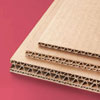
 Corrugated
 Cardboard
 Kraft
Kraft Rigid
Rigid Folding Carton Boxes
 Tuck End Boxes
 Auto Bottom Boxes
 Tuck Top Boxes
 Display Lid Boxes
 CBD Oil Boxes
 Hemp Oil Boxes
 CBD Tincture Boxes
 E-Liquid Boxes
 Vape Cartridge
 See all products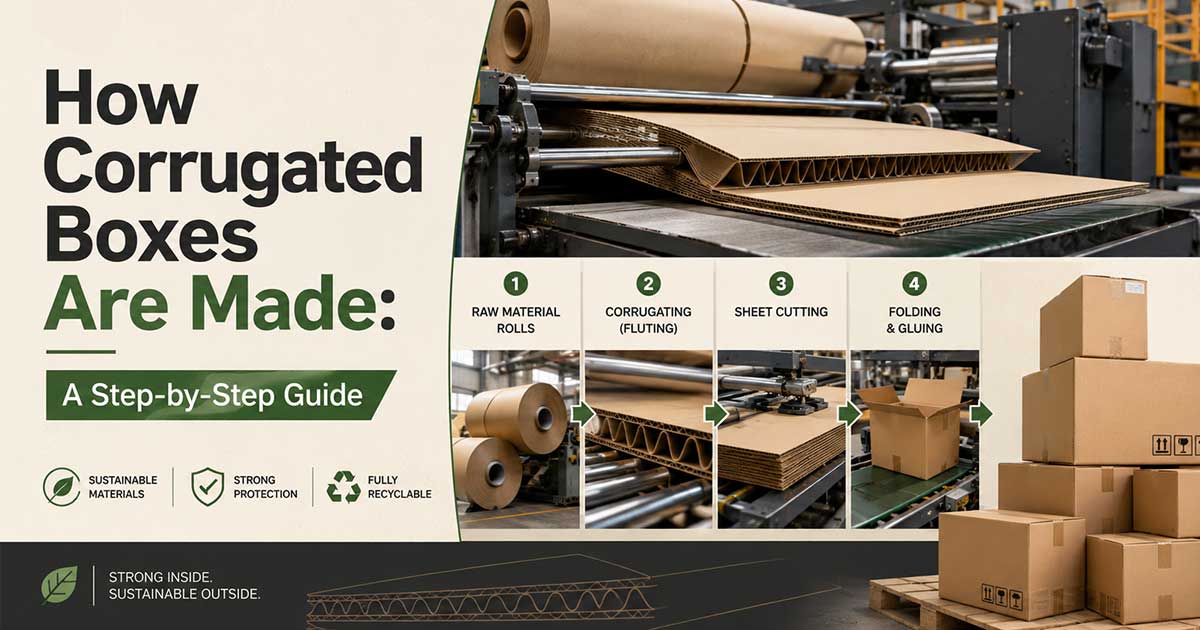
Corrugated boxes may look simple from the outside, but there is a proper process behind how they are made. From paper liners and fluted board to cutting, printing, folding, and finishing, every step affects the strength, appearance, and performance of the final box.
For UK businesses, understanding how corrugated boxes are manufactured can help you make better packaging decisions. It becomes easier to choose the right box strength, printing style, size, finish, and structure for your product.
Whether you need ecommerce packaging, shipping boxes, food packaging, retail boxes, mailer boxes, or display packaging, the manufacturing process plays a big role in how well your box protects and presents your product.
In this guide, we’ll explain how corrugated boxes are made in simple words, without confusing technical jargon.
Quick Answer: How Are Corrugated Boxes Made?
Corrugated boxes are made by combining flat paper liners with a fluted paper layer. The fluted layer is the wavy part inside the board that gives the box strength and cushioning. Once the corrugated board is made, it is cut, printed, creased, folded, glued, and finished into the final box shape.
The process can change depending on the box style, printing method, material strength, and custom design.
For custom-made options, you can explore custom corrugated boxes UK.
What Is Corrugated Board?
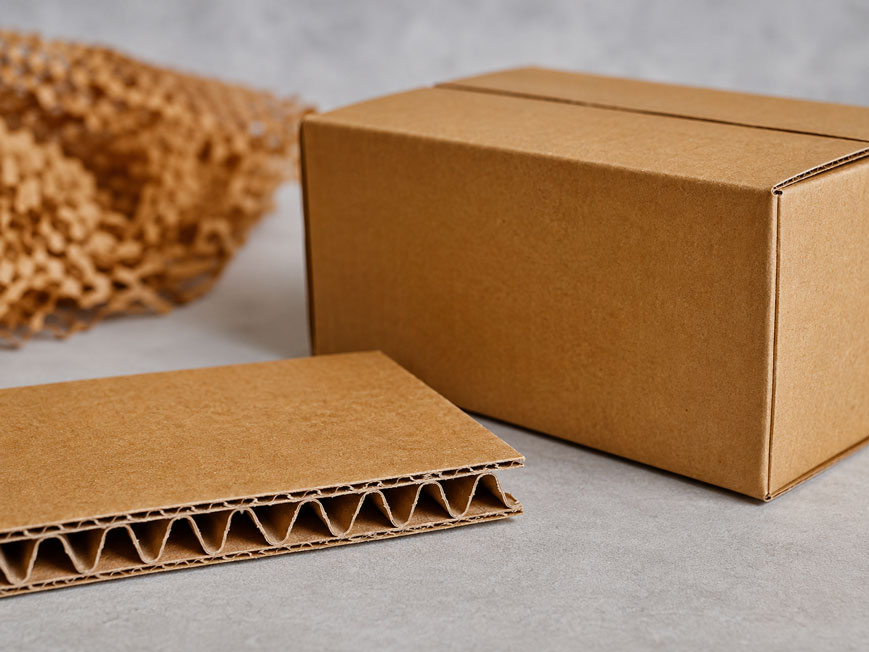
Corrugated board is the material used to make corrugated boxes. It usually has three parts:
- Outer liner
- Inner liner
- Fluted paper layer in the middle
The fluted layer is what makes corrugated packaging stronger than normal cardboard. It adds cushioning, support, and resistance against pressure.
This is why corrugated boxes are commonly used for shipping, ecommerce, food packaging, storage, retail display, and fragile product protection.
If you want a full overview of the material, you can read our complete guide to corrugated packaging boxes.
Step 1: Choosing the Paper Material
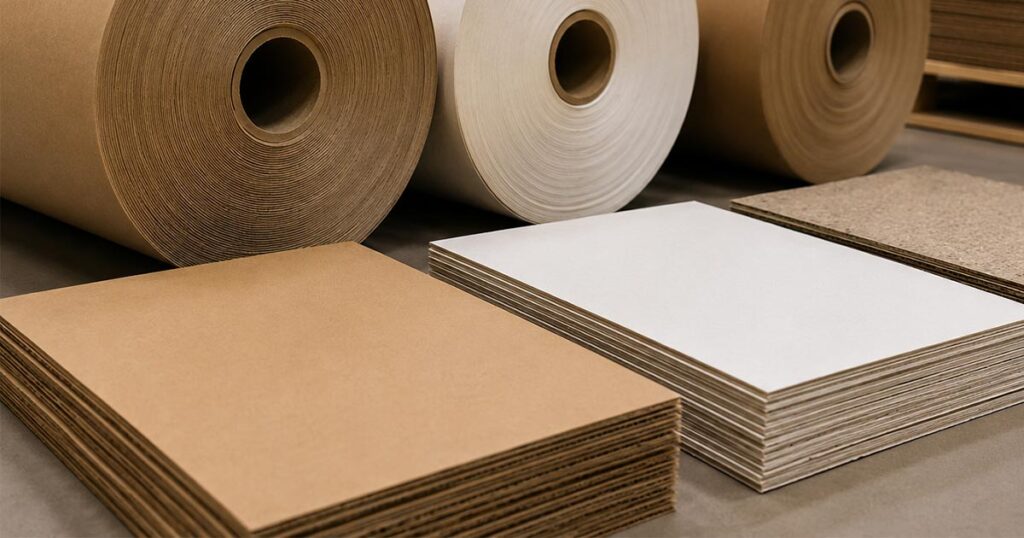
The first step in making corrugated boxes is choosing the paper material. The paper used for corrugated packaging is usually made from kraft paper, recycled paper, or a mix of both.
The quality of the paper matters because it affects the final strength, print quality, and appearance of the box.
For example:
- Kraft paper gives a natural brown look and good strength.
- White liner paper gives a cleaner surface for printing.
- Recycled paper can support more eco-conscious packaging goals.
- Stronger paper grades are better for heavier products.
The right paper choice depends on what the box will be used for. A simple shipping box may only need a standard brown kraft finish. A retail or gift box may need a cleaner printing surface.
If your brand prefers a natural packaging look, you can also compare options with custom kraft packaging boxes.
Step 2: Creating the Fluted Layer
The fluted layer is the wavy paper layer inside corrugated board. This is the part that gives the box its strength and cushioning.
During manufacturing, the paper is passed through heated rollers that shape it into waves. These waves are called flutes.
Different flute types can create different levels of strength, thickness, and print quality.
Common flute types include:
| Flute Type | Best For |
|---|---|
| E Flute | Retail boxes, mailer boxes, better print surface |
| B Flute | General packaging and good crush resistance |
| C Flute | Shipping boxes and stronger cushioning |
| BC Flute | Heavy-duty shipping and double wall boxes |
| EB Flute | Strong packaging with better printing finish |
You do not need to know every technical detail before ordering. A good packaging supplier can recommend the right flute based on your product weight, box size, and shipping needs.
Step 3: Bonding the Liners and Flute
Once the fluted paper is formed, it is bonded between liner sheets. This creates the corrugated board.
In simple words, the fluted paper is glued to one or more flat paper liners. This creates a strong board that can later be cut and folded into boxes.
The number of layers depends on the box strength needed.
Single Wall Corrugated Board
Single wall board has one fluted layer between two liners. It is suitable for lighter products, ecommerce packaging, retail boxes, and general shipping.
Double Wall Corrugated Board
Double wall board has two fluted layers and three liners. It is stronger and better for heavier, fragile, or stacked products.
For a detailed comparison, read our guide on single wall vs double wall corrugated boxes.
Step 4: Cutting the Board to Size
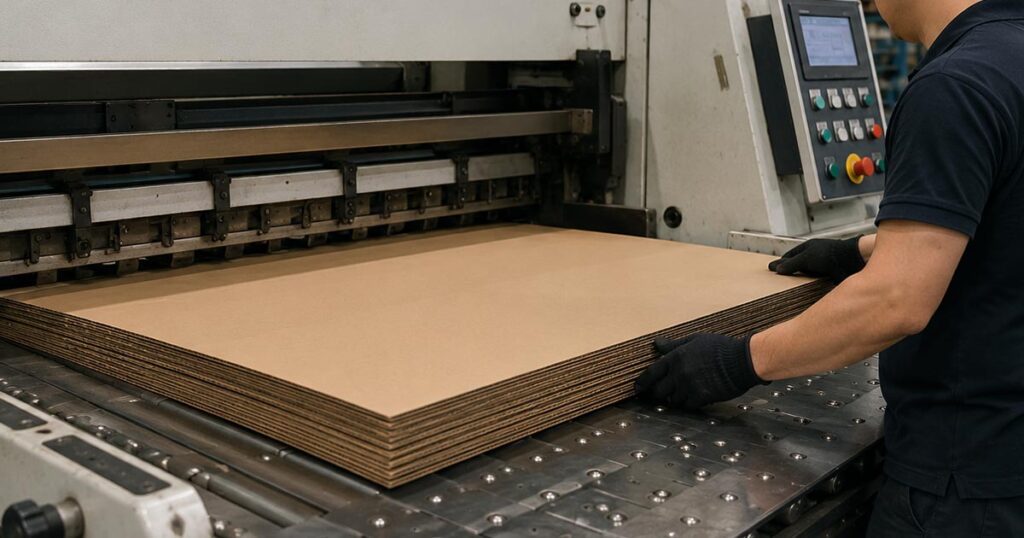
After the corrugated board is made, it is cut into sheets based on the required box size.
This is where accurate measurements become important. The box needs to fit the product properly, with enough room for protection, inserts, or padding if needed.
If the box is too small, the product may not fit safely. If the box is too large, it can waste material and allow the product to move during delivery.
This is why custom sizing is useful. It helps businesses avoid oversized boxes and gives the product a cleaner, more professional presentation.
For help with sizing and packaging decisions, read our guide on how to choose the right corrugated box.
Step 5: Creating the Box Dieline
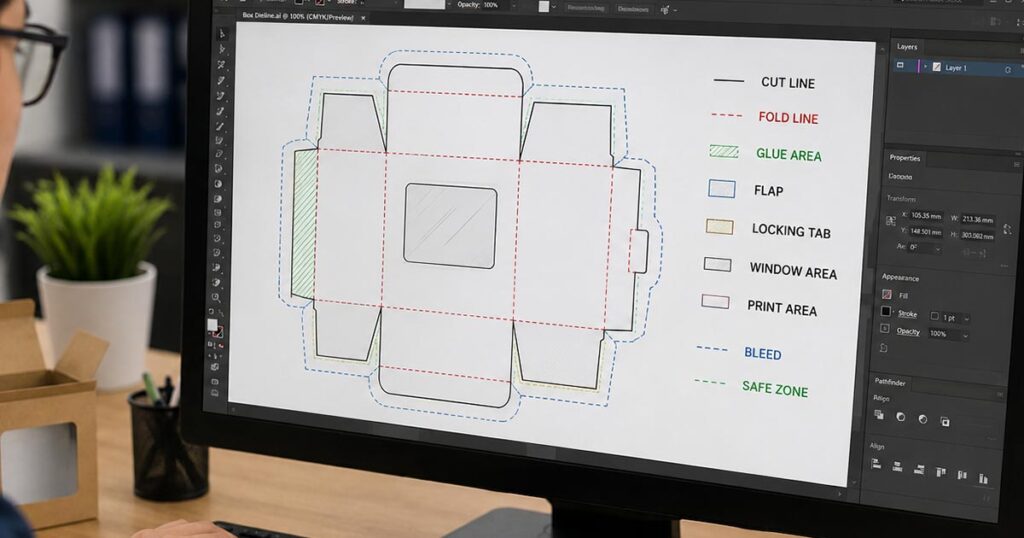
A dieline is the flat layout of the box before it is folded into shape. It shows where the box will be cut, creased, folded, and glued.
Think of it like a blueprint for your packaging.
A dieline usually includes:
- Cut lines
- Fold lines
- Glue areas
- Flaps
- Locking tabs
- Window areas if needed
- Print areas
- Bleed and safe zones for artwork
The dieline must be accurate because even a small mistake can affect how the box closes, folds, or holds the product.
For custom boxes, the dieline is usually created around the product size, box style, and printing requirements.
Step 6: Printing the Box Design
Once the board and dieline are ready, the box can be printed. Printing may happen before or after cutting, depending on the production method and box type.
Printed corrugated boxes can include:
- Logo
- Brand colours
- Product name
- Website
- QR code
- Social media handles
- Handling instructions
- Recycling message
- Thank-you note
- Product details
For shipping boxes, simple logo printing may be enough. For retail packaging, full-colour printing may be better because the box needs to attract attention.
For ecommerce brands, inside printing can also improve the unboxing experience. A simple message inside the box can make the packaging feel more personal.
To learn more, read our guide on printed corrugated boxes.
Step 7: Creasing and Scoring
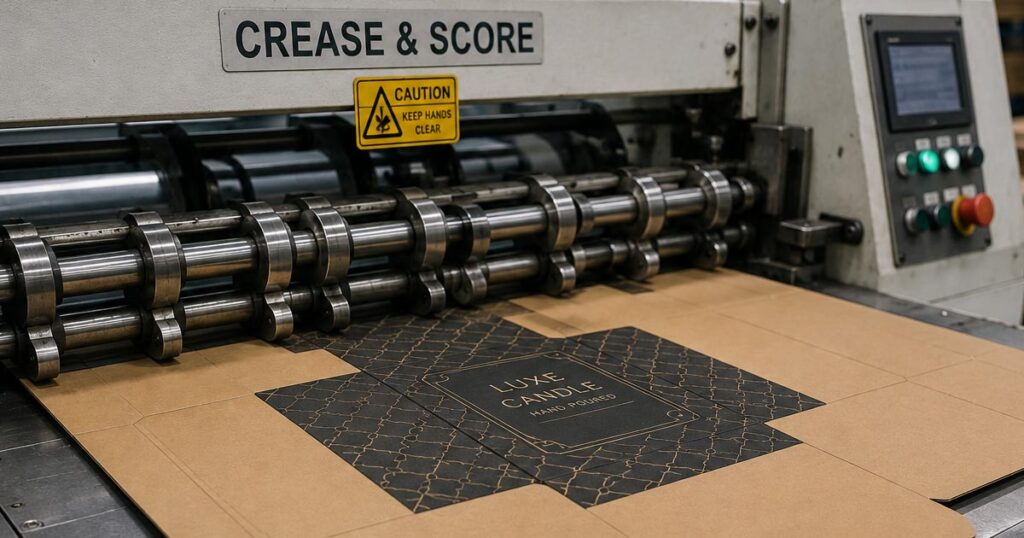
After printing, the board is creased or scored. This means fold lines are added so the box can bend neatly without cracking or tearing.
Creasing is important because corrugated board is thicker than simple paperboard. Without proper creases, the box may fold unevenly or look messy.
Good creasing helps the box:
- Fold cleanly
- Close properly
- Keep its shape
- Look more professional
- Hold the product securely
This step is especially important for mailer boxes, display boxes, gift boxes, and custom retail packaging.
Step 8: Die Cutting the Box Shape
Die cutting is the step where the corrugated sheet is cut into the final box shape.
This process creates the flaps, tabs, slots, windows, handles, or openings needed for the box design.
Die cutting is used for many custom styles, such as:
- Mailer boxes
- Display boxes
- Window boxes
- Food boxes
- Gift boxes
- Retail boxes
- Boxes with special openings
- Boxes with locking tabs
This is what turns a flat sheet of corrugated board into a practical packaging structure.
If you sell ecommerce products, custom mailer boxes or corrugated mailer boxes are common examples of die-cut packaging styles.
Step 9: Folding and Gluing
After die cutting, the box is folded and glued where needed.
Some corrugated boxes are designed to fold and lock without much glue. Others need glued sides or panels to keep the shape secure.
The folding and gluing stage affects how easy the box is to assemble, pack, and close.
A well-made box should:
- Fold easily
- Stay secure
- Hold its shape
- Close properly
- Protect the product
- Be practical for packing teams
For ecommerce and retail businesses, easy assembly matters. If a box is difficult to fold, it can slow down packing and increase labour time.
Step 10: Adding Inserts or Dividers
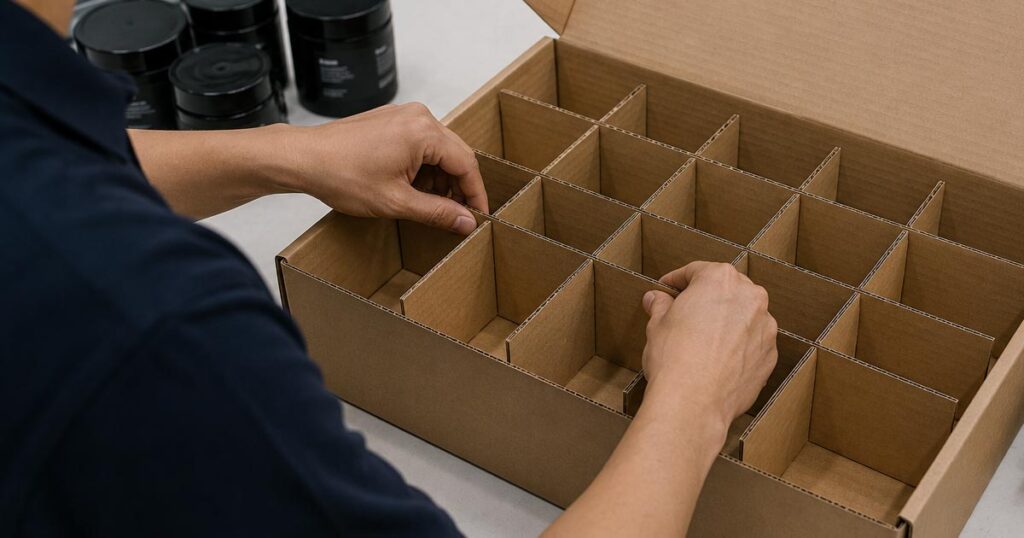
Some products need extra support inside the box. This is where inserts or dividers are added.
Inserts help keep products in place and reduce movement during shipping.
They are useful for:
- Glass jars
- Bottles
- Candles
- Cosmetics
- Gift sets
- Electronics
- Subscription boxes
- Food products
- Multiple items in one box
Inserts can also improve presentation. When the customer opens the box, the product looks neat and organised instead of loose inside the packaging.
For fragile or multi-item products, mailer boxes with inserts can be a strong option.
Step 11: Finishing Options
Finishing options are used to improve the look and feel of the box. Not every box needs special finishing, but it can be useful for retail, gift, premium, or branded packaging.
Common finishing options include:
- Matte finish
- Gloss finish
- Spot UV
- Foil stamping
- Embossing
- Debossing
- Window cut-outs
- Laminated finish
- Special coatings
For simple shipping boxes, you may not need premium finishes. For gift boxes, retail packaging, or high-end ecommerce boxes, finishing can make the packaging feel more professional.
The key is to choose finishes that add value. Too many effects can increase cost and make the design look too busy.
Step 12: Quality Checking
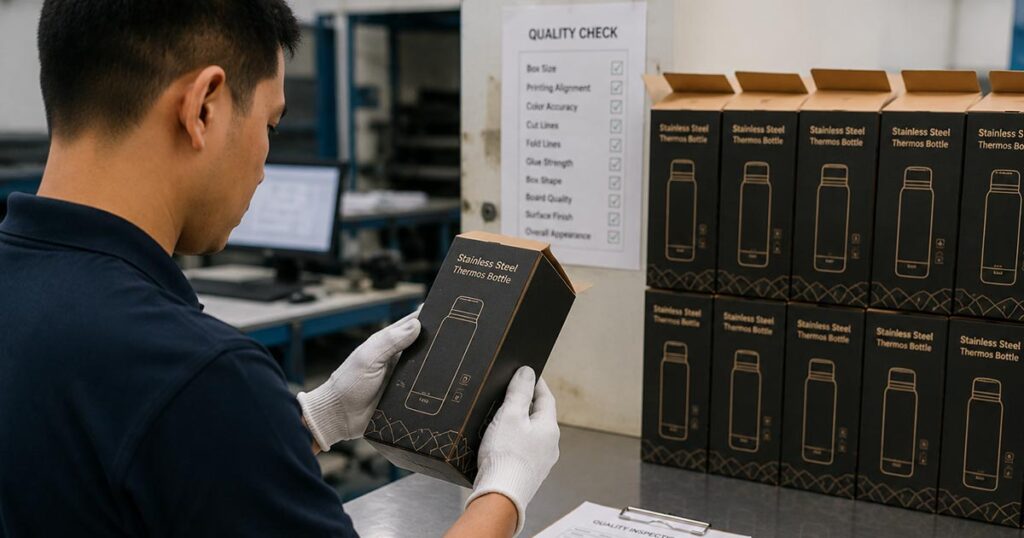
Before the boxes are packed and delivered, they should be checked for quality.
This may include checking:
- Box size
- Print alignment
- Colour accuracy
- Cut lines
- Fold lines
- Glue strength
- Box shape
- Board quality
- Surface finish
- Overall appearance
Quality checking is important because packaging mistakes can affect your product presentation and customer experience.
A box should not only look good. It should also fold correctly, close securely, and protect the product properly.
Step 13: Packing and Delivery
Once the boxes are complete, they are usually packed flat and delivered to the customer.
Flat-packed boxes are easier to store and transport. This is helpful for businesses that order in bulk but do not want assembled boxes taking up too much space.
When the boxes arrive, your team can fold and assemble them when needed.
Before ordering, it is worth thinking about:
- Storage space
- Monthly box usage
- Order quantity
- Delivery timeline
- Product launch dates
- Seasonal demand
Planning ahead can help avoid rush orders and last-minute packaging problems.
Why the Manufacturing Process Matters
Understanding how corrugated boxes are made helps you make better decisions when ordering custom packaging.
It helps you understand:
- Why box size matters
- Why board strength matters
- Why printing affects cost
- Why inserts may be needed
- Why custom dielines are important
- Why single wall and double wall boxes are different
- Why lead time is needed for custom orders
Good packaging is not just a box with a logo. It is a product protection system, brand presentation tool, and customer experience touchpoint.
How Manufacturing Affects Box Cost
The manufacturing process affects the final price of your corrugated boxes.
Common cost factors include:
| Cost Factor | Cost Impact |
|---|---|
| Material Choice | ★★★★★ |
| Box Size | ★★★★☆ |
| Printing | ★★★★☆ |
| Cutting & Structure | ★★★★☆ |
| Inserts | ★★★☆☆ |
| Finishing | ★★★★☆ |
| Order Quantity | ★★★★★ (Can Reduce Cost) |
Material choice
Stronger paper, special liners, or double wall board can increase cost.
Box size
Larger boxes use more material, so they usually cost more.
Printing
Simple logo printing is usually cheaper than full-colour artwork or inside printing.
Cutting and structure
Complex box shapes, windows, tabs, and custom openings can add to production work.
Inserts
Inserts or dividers add material and design work, but they can protect fragile products better.
Finishing
Matte, gloss, foil, embossing, or other finishes can increase the price.
Order quantity
Bulk orders usually lower the cost per box, while small orders often cost more per piece.
The best way to control cost is to keep the design practical, choose the right material, and avoid features that do not add real value.
Corrugated Box Manufacturing for Different Business Needs
Different businesses need different packaging styles. Here are some examples.
Ecommerce Businesses
Ecommerce brands usually need shipping-safe boxes that also look good when delivered. Mailer boxes, postage boxes, and boxes with inserts are popular options.
For shipping-focused packaging, read our guide on corrugated shipping boxes.
Food Businesses
Food brands may need pizza boxes, burger boxes, bakery boxes, cake boxes, takeaway boxes, or frozen food boxes.
The box should be practical, easy to carry, and suitable for the food product.
You can explore custom food packaging boxes or custom pizza boxes.
Retail Brands
Retail packaging needs strong presentation. Display boxes, shelf-ready boxes, and printed product boxes can help products stand out in-store.
You can explore custom display boxes or retail boxes.
Gift and Subscription Brands
Gift and subscription products need packaging that protects the item and creates a good unboxing experience.
Printed mailer boxes, gift-style boxes, and boxes with inserts are often useful here.
Common Mistakes to Avoid When Ordering Custom Corrugated Boxes
Here are a few mistakes businesses should avoid.
Ordering without accurate measurements
Wrong measurements can lead to boxes that are too tight, too loose, or not suitable for the product.
Choosing weak material
If the board is not strong enough, the product may get damaged during shipping or storage.
Overcomplicating the design
A clean design often looks more professional than a box with too much text, colour, or artwork.
Forgetting inserts
Fragile products often need internal support. The outside box alone may not be enough.
Not planning lead time
Custom boxes take time to design, print, cut, and deliver. Ordering too late can create delays.
Using the same box for every product
Different products need different packaging. A lightweight product and a fragile glass item should not use the same structure.
Final Thoughts
Corrugated boxes are manufactured through a proper process that includes material selection, fluting, bonding, cutting, printing, creasing, die cutting, folding, gluing, finishing, and quality checking.
Each step affects the final box. The material affects strength. The size affects fit. The printing affects branding. The structure affects protection. The finish affects presentation.
For UK businesses, understanding this process makes it easier to order packaging that actually works for the product.
Whether you need ecommerce mailer boxes, shipping boxes, food packaging, retail display boxes, or boxes with inserts, the right manufacturing choices can improve product protection and brand presentation.
For custom packaging made around your product size, strength, and design needs, explore corrugated packaging boxes from PackagingX and request a free quote.
FAQs
How are corrugated boxes made?
Corrugated boxes are made by forming a fluted paper layer, bonding it between liner sheets, cutting the board to size, printing the design, creasing fold lines, die cutting the shape, folding, gluing, and checking the final box for quality.
What is the fluted layer in corrugated boxes?
The fluted layer is the wavy paper layer inside corrugated board. It gives the box strength, cushioning, and support, making it better for shipping, storage, and product protection.
Can corrugated boxes be custom made?
Yes, corrugated boxes can be custom made in different sizes, shapes, strengths, printing styles, and finishes. They can also include inserts, dividers, windows, and special openings depending on the product.
Are corrugated boxes printed before or after cutting?
It depends on the production method and box style. Some boxes are printed before cutting, while others may be printed after the board is prepared. The method depends on the design, artwork, and packaging structure.
What affects the strength of a corrugated box?
The strength depends on the paper quality, flute type, board thickness, single wall or double wall structure, box size, and how the box is designed. Heavier or fragile products usually need stronger board.
Why do custom corrugated boxes need a dieline?
A dieline acts like a blueprint for the box. It shows where the box will be cut, folded, glued, and printed. A correct dieline helps the final box fold properly and fit the product correctly.