



 Corrugated
 Cardboard
 Kraft
Kraft Rigid
Rigid Folding Carton Boxes
 Tuck End Boxes
 Auto Bottom Boxes
 Tuck Top Boxes
 Display Lid Boxes
 CBD Oil Boxes
 Hemp Oil Boxes
 CBD Tincture Boxes
 E-Liquid Boxes
 Vape Cartridge
 See all products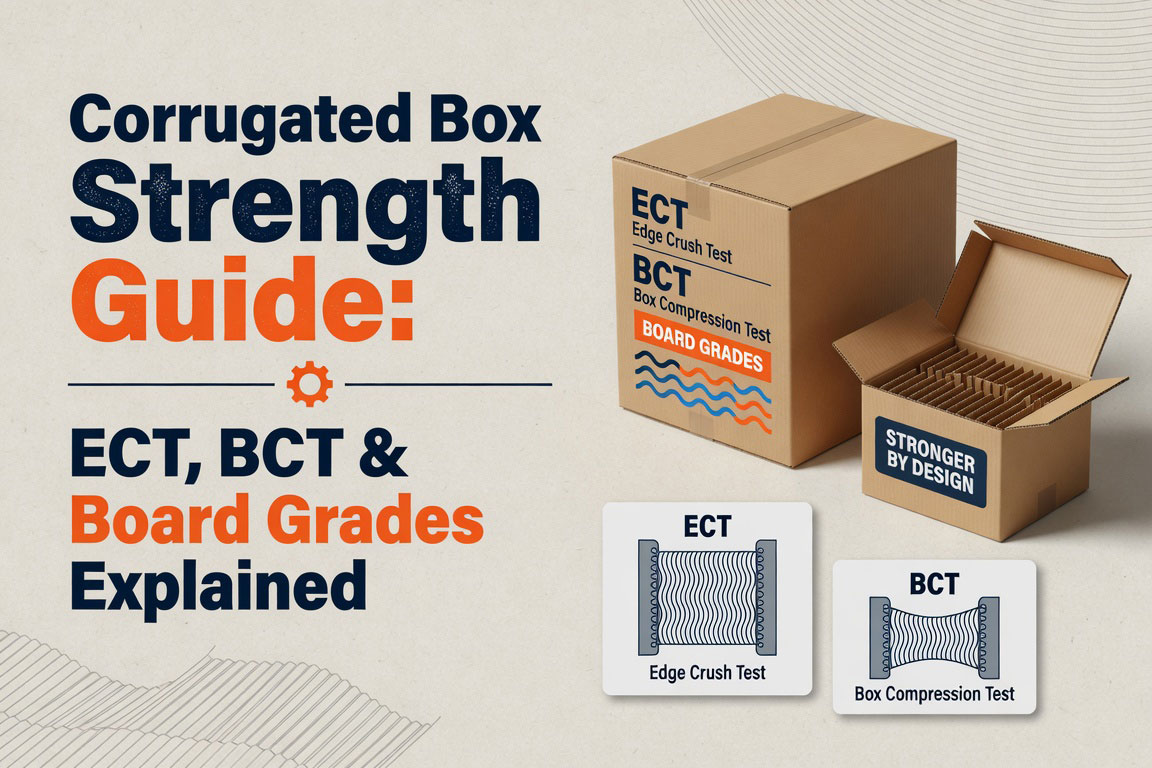
Choosing the wrong corrugated box can be an expensive mistake.
A box that is too weak can collapse during storage, become damaged in transit, or fail to protect the products inside. On the other hand, choosing a box that is stronger than necessary can increase packaging costs without providing any real benefit.
This is why understanding corrugated box strength is so important.
Whether you’re shipping ecommerce orders, retail products, food items, or industrial goods, selecting the right board grade can help reduce damage, lower costs, and improve customer satisfaction.
In this guide, we’ll explain how corrugated box strength is measured, what ECT and BCT ratings mean, and how UK businesses can choose the right corrugated packaging for their products.
Why Corrugated Box Strength Matters

Many businesses focus on box size, printing, and branding.
But the real job of packaging is protection.
Your packaging may experience:
- Warehouse stacking
- Pallet storage
- Courier handling
- Conveyor belts
- Vehicle transportation
- Customer delivery
If the box cannot handle these conditions, the product inside is at risk.
According to packaging industry studies, damaged shipments cost businesses millions every year through returns, replacements, refunds, and lost customer trust.
Before choosing a box, it’s worth understanding how strength is measured.
Corrugated Packaging Boxes: Complete Guide for UK Businesses
What Determines Corrugated Box Strength?
Several factors affect how strong a corrugated box will be.
Board Grade
Different corrugated boards have different strength ratings.
Higher-grade boards generally provide:
- Better stacking performance
- Greater compression resistance
- Improved durability
Flute Type
The fluted layer inside the board contributes significantly to strength.
Common flute types include:
| Flute Type | Thickness | Typical Use |
|---|---|---|
| E Flute | Thin | Retail packaging |
| B Flute | Medium | Ecommerce packaging |
| C Flute | Thick | Shipping cartons |
| BC Flute | Double wall | Heavy-duty packaging |
Wall Construction
The number of corrugated layers affects strength.
This is where single wall and double wall packaging come into play.
What Is ECT?
ECT stands for Edge Crush Test.
This is the most commonly used measurement in modern corrugated packaging.
ECT measures how much pressure a piece of corrugated board can withstand when force is applied vertically to its edge.
The higher the ECT rating, the stronger the board.
Common ECT Ratings
| ECT Rating | Typical Use |
|---|---|
| 23 ECT | Lightweight products |
| 32 ECT | Standard ecommerce shipping |
| 44 ECT | Heavier products |
| 48 ECT | Industrial packaging |
| 51 ECT+ | Heavy-duty applications |
For most ecommerce businesses, 32 ECT is usually sufficient.
However, heavier or fragile products may require higher ratings.
What Is BCT?
BCT stands for Box Compression Test.
Unlike ECT, which measures board strength, BCT measures the overall strength of a completed box.
BCT evaluates how much weight a fully assembled box can withstand before collapsing.
This is particularly important for:
- Warehouse stacking
- Pallet shipments
- Long-term storage
ECT vs BCT: What’s the Difference?
Many businesses confuse these measurements.
Here’s a simple comparison:
| Feature | ECT | BCT |
|---|---|---|
| Measures board strength | Yes | No |
| Measures complete box strength | No | Yes |
| Used for material selection | Yes | Sometimes |
| Used for stacking analysis | Indirectly | Yes |
| Most common industry standard | Yes | Less common |
Today, most corrugated packaging manufacturers rely primarily on ECT ratings.
Single Wall vs Double Wall Strength
One of the biggest decisions businesses face is choosing between single wall and double wall corrugated boxes.
Single Wall Corrugated Boxes
Single wall boxes contain:
- One fluted layer
- Two liner boards
Advantages:
✅ Cost effective
✅ Lightweight
✅ Suitable for most ecommerce products
✅ Easy to store
Common uses:
- Clothing
- Cosmetics
- Food products
- Subscription boxes
Double Wall Corrugated Boxes
Double wall boxes contain:
- Two fluted layers
- Three liner boards
Advantages:
✅ Greater compression strength
✅ Better stacking performance
✅ Improved puncture resistance
✅ Better protection for fragile products
Common uses:
- Electronics
- Glass products
- Industrial goods
- Heavy retail products
Although double wall packaging costs more, it often prevents costly damage during transportation.
Want to understand which box type is right for your products? Read our full guide on single wall vs double wall corrugated boxes.
How to Choose the Right Corrugated Box Strength
There is no universal answer.
The right board strength depends on several factors.
Product Weight
Heavier products require stronger board grades.
General guidance:
| Product Weight | Suggested Board |
|---|---|
| Under 5kg | Single Wall |
| 5kg – 15kg | Heavy Single Wall |
| 15kg – 30kg | Double Wall |
| 30kg+ | Heavy Duty Double Wall |
Product Fragility
A lightweight glass bottle may require stronger packaging than a heavier non-fragile item.
Consider:
- Glass
- Ceramics
- Electronics
- Luxury products
These often benefit from higher-strength corrugated packaging.
Stacking Requirements
Will your products be:
- Stored in warehouses?
- Stacked on pallets?
- Kept in storage for extended periods?
If so, compression strength becomes much more important.
Common Mistakes Businesses Make
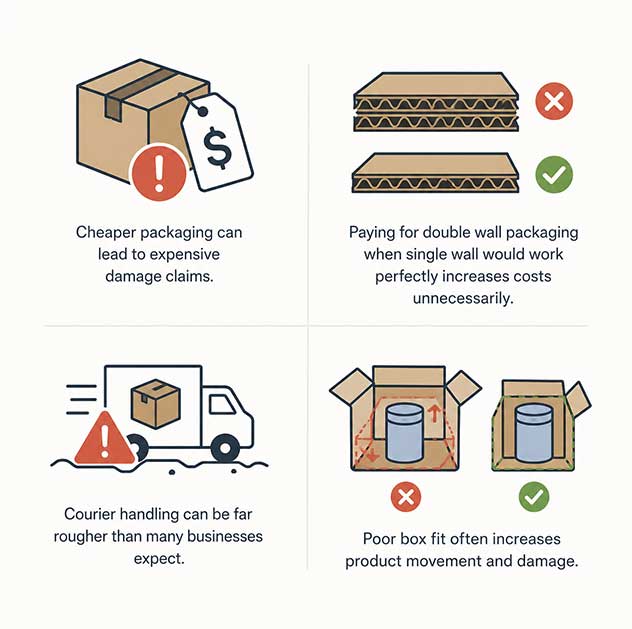
Choosing Packaging Based Only on Price
The cheapest box is rarely the cheapest decision.
Low-cost packaging may save a little upfront, but if it leads to damaged products, returns, refunds, replacement shipments, and unhappy customers, the real cost becomes much higher. Packaging should be judged by total protection value, not just unit price.
Paying for More Strength Than You Need
Stronger is not always smarter.
Many businesses pay for double wall corrugated boxes when a well-designed single wall box would protect the product perfectly. This adds unnecessary material cost, increases packaging weight, and can raise shipping expenses without improving the customer experience.
Ignoring Real Shipping Conditions
Your box does not travel gently.
Parcels are stacked, dropped, pushed through conveyor systems, squeezed into vans, and handled by multiple people before reaching the customer. If your packaging is designed only for how the product sits in your warehouse, not how it survives delivery, damage becomes predictable.
Using Generic Box Sizes
A box that does not fit properly does not protect properly.
When there is too much empty space inside the box, the product moves around during transit. That movement increases the risk of dents, cracks, leaks, and breakage. Custom-sized packaging reduces movement, improves protection, cuts wasted material, and can even lower shipping costs.
The Real Lesson
Most packaging mistakes happen because businesses look at the box as a cost.
Smart businesses look at packaging as damage prevention, brand protection, and customer experience all in one. The right box is not always the cheapest or the strongest. It is the one that fits the product, the shipping journey, and the business goal.
Does Stronger Packaging Cost More?
Yes.
But not always as much as businesses think.
The additional cost of stronger board grades is often far less than:
- Product replacements
- Return shipping
- Customer complaints
- Negative reviews
Trying to work out your packaging budget? Our guide on how much corrugated boxes cost in the UK breaks down the main pricing factors clearly.
Corrugated Box Strength Quick Reference Chart
| Scenario | Recommended Option |
|---|---|
| Clothing | Single Wall |
| Cosmetics | Single Wall |
| Food Packaging | Single Wall |
| Electronics | Double Wall |
| Glass Bottles | Double Wall |
| Industrial Parts | Double Wall |
| Long Distance Shipping | Double Wall |
| Heavy Bulk Orders | Double Wall |
Frequently Asked Questions
What does 32 ECT mean?
32 ECT means the corrugated board can withstand 32 pounds of force per inch when pressure is applied vertically to its edge.
Is double wall stronger than single wall?
Yes. Double wall corrugated boxes provide greater compression strength, stacking performance, and puncture resistance.
Is ECT more important than BCT?
For most modern packaging applications, ECT is the primary industry standard used to determine board strength.
What ECT rating is best for ecommerce shipping?
32 ECT is commonly used for standard ecommerce shipments, although heavier products may require higher ratings.
How do I know which board grade I need?
The correct board grade depends on product weight, fragility, shipping conditions, and storage requirements.
Where to Get Custom Corrugated Boxes in the UK
At PackagingX, we help businesses choose corrugated packaging that balances protection, presentation, and cost.
Whether you need lightweight ecommerce packaging, heavy-duty shipping cartons, or custom printed corrugated boxes, our team can help you select the right board grade and box style for your products.
Need help choosing the right corrugated box strength? Contact PackagingX for expert guidance and a free quote.
Final Thoughts
Corrugated box strength is about more than just choosing the thickest board available.
The right packaging should match your product weight, shipping requirements, storage conditions, and budget.
Understanding ECT ratings, BCT performance, and board grades allows businesses to make smarter packaging decisions while reducing the risk of product damage.