

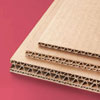
 Corrugated
 Cardboard
 Kraft
Kraft Rigid
Rigid Folding Carton Boxes
 Tuck End Boxes
 Auto Bottom Boxes
 Tuck Top Boxes
 Display Lid Boxes
 CBD Oil Boxes
 Hemp Oil Boxes
 CBD Tincture Boxes
 E-Liquid Boxes
 Vape Cartridge
 See all products
If you are ordering packaging for your business, you have probably seen both terms used everywhere: cardboard boxes and corrugated boxes. Many people think they are the same thing, but there is a clear difference between the two.
The simple answer is this: cardboard boxes are usually made from thick paperboard and are better for lightweight product packaging, while corrugated boxes have a fluted layer inside, making them stronger and better for shipping, storage, and product protection.
For UK businesses, choosing between cardboard and corrugated packaging depends on what you are selling, how heavy the product is, whether it will be shipped, and how much protection it needs. A small cosmetic product may work well in a cardboard box, but a glass candle, food product, ecommerce order, or fragile item may need stronger corrugated packaging.
In this guide, we’ll explain the difference between corrugated boxes and cardboard boxes in simple words, where each one works best, and how to choose the right option for your products.
Quick Answer: Corrugated Boxes vs Cardboard Boxes
Cardboard boxes are better for lightweight retail packaging, product display, sleeves, folding cartons, and simple product presentation.
Corrugated boxes are better for shipping, ecommerce, storage, delivery, and fragile products because they have a fluted inner layer that gives extra strength and cushioning.
If your product only needs shelf presentation, cardboard may be enough. If your product needs to survive delivery, stacking, or courier handling, corrugated boxes are usually the safer choice.
What Are Cardboard Boxes?
Cardboard boxes are usually made from thick paperboard. They are commonly used for lightweight packaging where presentation is more important than heavy protection. Cardboard is easy to print on, easy to fold, and gives products a clean retail look. This makes it a popular choice for brands that want attractive packaging for shelves, counters, and product displays.
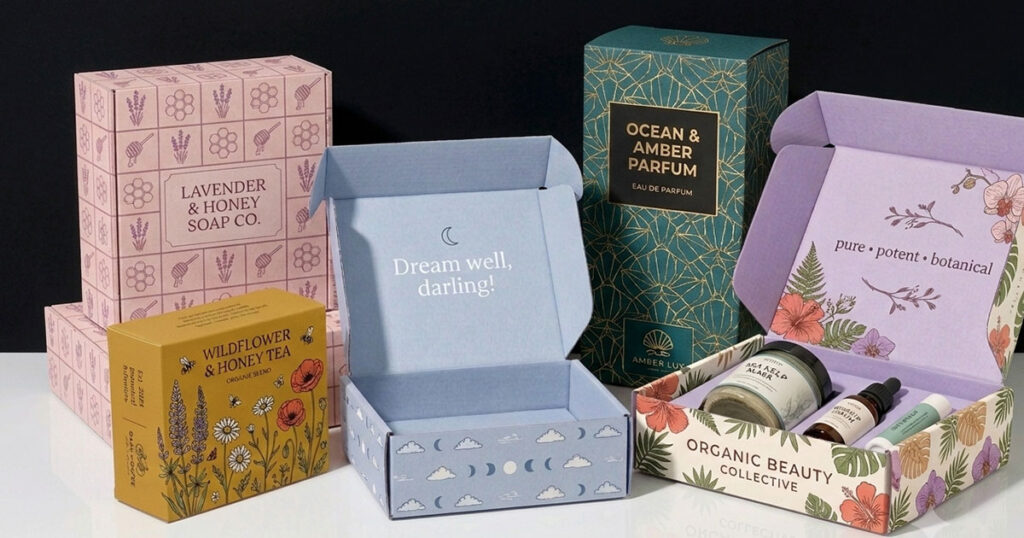
You will often see cardboard packaging used for:
- Cosmetic boxes
- Small retail boxes
- Medicine boxes
- Soap boxes
- Lightweight food packaging
- Display packaging
- Folding cartons
However, cardboard is not always the best option for shipping or heavy products. Since it does not have the same fluted structure as corrugated board, it usually offers less strength and less cushioning.
If your product is light and mainly needs presentation, custom cardboard boxes can be a good choice.
What Are Corrugated Boxes?
Corrugated boxes are made from corrugated board. This board usually has three layers: an inside liner, an outside liner, and a fluted paper layer in the middle.
That fluted layer is the wavy part inside the board. It gives corrugated boxes their strength, cushioning, and protection.
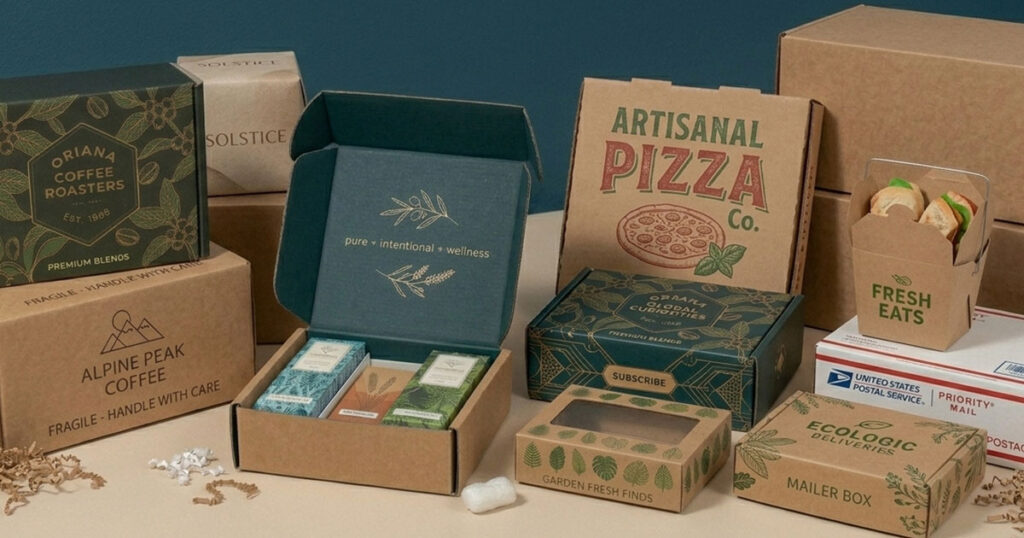
Corrugated boxes are commonly used for:
- Ecommerce boxes
- Storage boxes
- Subscription boxes
- Pizza boxes
- Mailer boxes
- Postage boxes
- Food packaging
- Gift packaging
- Fragile products packaging
- Heavy products packaging
Because of their structure, corrugated boxes are stronger than standard cardboard boxes. They are better at handling pressure, movement, stacking, and rough delivery conditions.
This is why many businesses choose custom corrugated boxes in UK when they need packaging that protects the product as well as presents the brand properly.
The Main Difference Between Cardboard and Corrugated Boxes
The biggest difference is the structure.
Cardboard boxes are usually made from a single layer of thick paperboard.
Corrugated boxes have a fluted layer between two flat liners.
That small difference changes how the box performs. Cardboard is better for light packaging and retail presentation. Corrugated board is better for protection, shipping, and strength.
Here is a simple comparison:
| Feature | Cardboard Boxes | Corrugated Boxes |
|---|---|---|
| Structure | Usually made from single-layer paperboard | Made with a fluted layer between liner sheets |
| Strength | Best for light products and shelf packaging | Better for shipping, stacking, and product protection |
| Best Use | Cosmetics, sleeves, retail cartons, small product boxes | Ecommerce orders, food delivery, mailers, storage, fragile goods |
| Printing | Smooth surface for detailed retail artwork | Can be printed for branding, shipping, display, and ecommerce |
| Protection | Basic protection for lightweight items | Stronger cushioning because of the fluted layer |
| Cost | Often cheaper for simple light boxes | May cost more but gives better protection for delivery |
| Eco Value | Paper-based and recyclable when clean | Paper-based, reusable, and recyclable when clean and dry |
Why the Structure Changes Everything
A box can look simple from the outside, but the structure inside decides how it performs.
Cardboard packaging is usually flat paperboard. It is neat, smooth, and easy to print. That is why it works well for products that need shelf appeal more than shipping strength.
Corrugated packaging has a fluted middle layer. This layer creates tiny air pockets inside the board. Those air pockets help absorb pressure and give the box more resistance against crushing, bending, and impact.
That is why the same product can feel safer in corrugated packaging during delivery.
Think of it this way. A cardboard box is like a neat product cover. A corrugated box is like a protective shell.
Both can look branded. Both can be printed. Both can be made in custom sizes. But the job they do is different.
For example, a small soap bar in a retail shop may only need cardboard. But if that same soap brand is shipping gift bundles through a courier, corrugated mailer boxes may be a better choice.
A cosmetic serum may look beautiful in a paperboard carton, but if it is glass and going through delivery, it may still need corrugated outer packaging or inserts.
This is why many businesses use both materials together. Cardboard for the product box. Corrugated for the outer shipping box.
Cardboard vs Corrugated: Think About the Product Journey
The easiest way to choose the right box is to follow the product journey.
Do not start with the material. Start with where the product goes.
Ask these questions:
- Will the product sit on a shelf?
- Will the customer pick it up in a shop?
- Will it be shipped through a courier?
- Will it be stored in a warehouse?
- Will boxes be stacked on top of each other?
- Is the product breakable?
- Is the product heavy?
- Will the customer open the box at home?
If the box only needs to look good on a shelf, cardboard may be enough. If the box needs to travel, corrugated is usually the safer option.
This product journey method helps you avoid the common mistake of choosing packaging only by appearance. A beautiful box is useful, but it still has to do its job.
For ecommerce, the journey is longer. The box may be packed, stored, labelled, collected, moved through a depot, stacked with other parcels, placed inside a van, delivered, and finally opened by the customer.
During that journey, packaging is not decoration. It is protection.
That is where corrugated packaging becomes valuable.
Which One Is Stronger?
Corrugated boxes are stronger than standard cardboard boxes.
The fluted middle layer gives the box extra support. It helps absorb pressure and protects products during movement, storage, and delivery.
This makes corrugated boxes a better choice for:
- Products sent through couriers
- Products stored in warehouses
- Fragile products
- Heavy products
- Ecommerce orders
- Products that may be stacked
- Items that need extra cushioning
Cardboard boxes can still be strong enough for lighter products, but they are not usually the first choice for shipping or rough handling.
For example, a lightweight soap box may work perfectly in cardboard. But if you are shipping glass jars, candles, shoes, food items, or subscription products, corrugated packaging is usually safer.
Corrugated Flute Types Explained
When people compare cardboard and corrugated boxes, they often stop at the word “stronger.” But corrugated board also comes in different flute types.
The flute is the wavy layer inside the corrugated board. It affects thickness, cushioning, print quality, and strength.
You do not need to know every technical detail before ordering, but understanding the basics helps you ask better questions.
E Flute
E flute is thinner than many other corrugated flute types. It gives a smoother surface and is often used for printed mailer boxes, retail packaging, cosmetic packaging, and premium ecommerce boxes.
It is a good option when you want a neat branded look but still need more strength than standard cardboard.
Use E flute for:
- Small ecommerce boxes
- Cosmetic packaging
- Retail display boxes
- Subscription mailers
- Light product packaging
B Flute
B flute is slightly thicker and gives good crush resistance. It is often used for retail displays, food packaging, and general packaging where the box needs a good balance of strength and presentation.
Use B flute when your product needs more support but still needs to look clean.
C Flute
C flute is thicker and gives better cushioning. It is commonly used for shipping boxes and storage cartons.
This can be useful for products that go through handling, stacking, or courier delivery.
Use C flute for:
- Shipping boxes
- Warehouse cartons
- Storage boxes
- Bulk packaging
- Products needing more cushioning
Double Wall Flutes
Double wall corrugated board uses two fluted layers. This gives more strength for heavier or fragile products.
Double wall options are often used for:
- Glass items
- Ceramics
- Electronics
- Heavy ecommerce products
- Wholesale shipping
- Products that may be stacked
If you are not sure which flute type is right, focus on your product weight, fragility, delivery method, and how the box will be handled.
For more detailed corrugated guidance, read our complete guide to corrugated packaging boxes.
Strength, Stacking, and Crush Resistance
Strength is one of the biggest reasons businesses choose corrugated boxes over cardboard boxes.
A retail cardboard box may look clean, but it is not always designed to handle pressure. Corrugated boxes are better when packages need to survive stacking, movement, and delivery.
Think about what happens in real life.
A box may be stacked in a warehouse. It may sit under other parcels during courier handling. It may be moved several times before delivery. It may be placed in a van with heavier boxes around it.
This is where strength matters.
Corrugated packaging helps with:
- Stacking support
- Impact protection
- Crush resistance
- Product cushioning
- Warehouse handling
- Courier movement
Cardboard boxes can still work well for shelf packaging. But if your product depends on the box to survive transport, corrugated is usually the safer choice.
A simple rule is this: if the box is part of delivery protection, choose corrugated. If the box is mainly for product presentation, cardboard may be enough.
Why Product Weight Matters So Much
Weight is one of the clearest ways to decide between cardboard and corrugated boxes.
Light products can often sit safely in cardboard packaging. Heavy products need stronger support.
For example, a small paper product, soap, supplement carton, or cosmetic box may work well in cardboard. But a candle jar, glass bottle, shoe box, food bundle, or electrical item usually needs stronger packaging.
Heavy products can cause weak packaging to bend, split, or collapse. Even if the box looks fine when packed, it may fail during delivery.
That is why packaging should be tested against the real weight of the product, not just the size.
Before ordering, check:
- The weight of one product
- The weight of multiple products in one box
- Whether the box will be stacked
- Whether the product has sharp edges
- Whether the product can move inside the box
- Whether the product needs inserts
If the product is heavy, fragile, or shipped regularly, corrugated packaging is usually worth the extra cost.
Which One Looks Better for Branding?
Both cardboard and corrugated boxes can look good when designed properly.
Cardboard boxes often have a smoother surface, which makes them great for detailed retail printing. They work well for products that need strong shelf appeal, such as cosmetics, supplements, soaps, candles, and small retail items.
Corrugated boxes can also be printed with logos, colours, product details, QR codes, and brand messages. They are often used for branded ecommerce packaging, mailer boxes, display boxes, and shipping boxes.
If your product will sit on a shop shelf, cardboard may give a cleaner retail look. If your product will be shipped directly to the customer, printed corrugated packaging may be better because it offers both branding and protection.
For ecommerce brands, the box is part of the customer experience. A plain shipping box does the job, but a printed corrugated box can make the delivery feel more professional and memorable.
Printing and Finishing: Which Material Gives the Better Look?
The best material for printing depends on what the box needs to do.
Cardboard usually has a smoother surface, which makes it great for detailed retail graphics. If your packaging needs product information, ingredients, fine artwork, or rich colour detail, paperboard cardboard can be a strong choice.
That is why cardboard is common for:
- Cosmetics
- Supplements
- Skincare
- Pharmaceutical-style boxes
- Product sleeves
- Small food cartons
Corrugated boxes can also look professional when printed well. They are often used for branded delivery packaging, ecommerce mailers, display boxes, pizza boxes, subscription boxes, and retail-ready packaging.
Corrugated printing works well for:
- Logo printing
- Brand colours
- QR codes
- Handling instructions
- Recycling messages
- Inside lid messages
- Simple product details
For ecommerce, corrugated packaging often gives a better overall experience because the same box can protect the product and present the brand.
A customer may not remember the label on a plain parcel. But they may remember a clean printed mailer with a thank-you message inside.
When to Use Both Cardboard and Corrugated Together
Sometimes the best choice is not cardboard or corrugated.
It is both.
Many businesses use cardboard as the inner product box and corrugated as the outer shipping box.
This is common for products like:
- Perfumes
- Cosmetics
- Supplements
- Electronics
- Skincare bottles
- Glass jars
- Gift sets
- Premium retail products
The cardboard box gives the product a polished retail look. The corrugated box protects it during delivery.
This combination is useful when your product needs to look premium and also survive shipping.
For example, a skincare brand may pack the serum in a printed cardboard carton. Then that carton goes inside a corrugated mailer with inserts. The customer gets the retail presentation and the product gets the protection it needs.
This approach may cost more than using one material, but it can reduce damage and improve the customer experience.
Which One Is Better for Shipping?
Corrugated boxes are better for shipping.
Shipping puts packaging under pressure. Boxes may be moved, stacked, dropped, pushed, or handled several times before reaching the customer. Corrugated packaging is designed to handle these situations better than standard cardboard.
Corrugated boxes are commonly used for ecommerce and delivery because they are:
- Strong
- Lightweight
- Protective
- Easy to customise
- Suitable for courier handling
- Available in different strengths
- Better for fragile products
Cardboard boxes may work for internal packaging or lightweight shelf packaging, but they are usually not enough as the main shipping box for delicate or heavier products.
If you sell online, corrugated mailer boxes, postage boxes, or shipping boxes are usually the better choice.
Which One Is Better for Retail Packaging?
Cardboard boxes are often better for lightweight retail packaging.
They are commonly used for products that need to look neat and attractive on shelves. The smooth surface is good for full-colour printing, product information, ingredients, branding, and design.
Cardboard boxes are a good option for:
- Cosmetics
- Skincare products
- Small food products
- Supplements
- Medicines
- Soaps
- Lightweight retail items
- Product sleeves
However, corrugated packaging can also work well for retail when the product needs extra strength or display presentation.
For example, custom display boxes and retail boxes can be made using corrugated board when products need both visibility and protection.
Which One Is Better for Ecommerce?
Corrugated boxes are usually better for ecommerce.
In ecommerce, the packaging needs to protect the product from the moment it leaves your business until it reaches the customer. It also needs to look professional when the customer opens it.
Corrugated boxes are useful for ecommerce because they can be made in different styles, such as:
- Mailer boxes
- Postage boxes
- Subscription boxes
- Shipping boxes
- Boxes with inserts
- Gift-style ecommerce boxes
For products that need extra support inside the box, you can also use dividers or inserts. These are helpful for bottles, candles, cosmetics, glass items, and gift sets.
If your brand sends products directly to customers, custom mailer boxes or corrugated mailer boxes can give you a strong balance of protection and presentation.
Cardboard vs Corrugated for Subscription Boxes
Subscription boxes need packaging that feels exciting but also protects the products inside.
This is why corrugated mailer boxes are usually the better choice for subscription packaging. They are stronger than standard cardboard, can be printed inside and outside, and can be made with inserts or compartments.
Subscription boxes often include multiple products. That creates two risks.
First, the products can move inside the box. Second, the unboxing experience can look messy if the items are not arranged properly.
Corrugated packaging helps solve both problems.
A good subscription box should:
- Fit the products neatly
- Protect products during delivery
- Create a branded opening experience
- Use inserts if needed
- Keep items organised
- Use the right board strength
Cardboard may work for very light subscription items, but corrugated is usually safer when the box is being posted to customers.
If you sell subscriptions, custom mailer boxes are usually a strong starting point.
Cardboard vs Corrugated for Food Packaging
Food packaging depends on the type of food.
Cardboard may work for lightweight dry food cartons, sleeves, and retail food boxes. Corrugated packaging is more common when the food needs stronger handling, delivery support, or heat and structure control.
Corrugated packaging is often used for:
- Pizza boxes
- Burger boxes
- Bakery boxes
- Cake boxes
- Donut boxes
- Frozen food boxes
- Takeaway packaging
- Food delivery boxes
Food businesses need to think about more than just strength. They also need to think about grease, moisture, heat, stacking, handling, and customer convenience.
A pizza box needs to hold its shape. A bakery box needs to protect soft products. A frozen food box needs to handle storage and delivery. A takeaway box needs to be practical for staff and customers.
If your food packaging is mainly for retail shelves, cardboard may be enough. If it needs delivery strength, corrugated is usually better.
You can explore custom food packaging boxes for more product-specific options.
Cardboard vs Corrugated for Fragile Products
Fragile products need more than a neat-looking box.
They need packaging that controls movement.
This is where corrugated packaging has a clear advantage.
Fragile products include:
- Candles
- Glass jars
- Bottles
- Ceramics
- Electronics
- Cosmetic containers
- Gift sets
- Food jars
If these products move inside the box, they can break, scratch, leak, or arrive damaged.
Corrugated inserts, dividers, and pads can help keep products in position. This is especially useful when you are shipping more than one item in the same box.
Cardboard can still be used as a product carton, but the outer packaging should usually be corrugated when the item is fragile.
For fragile ecommerce orders, mailer boxes with inserts can improve both protection and presentation.
Cardboard vs Corrugated for Retail Displays
Retail display packaging is a little different.
The packaging needs to hold products neatly and make them easy to see. It may sit on a shelf, counter, promotional stand, or point-of-sale area.
Cardboard display packaging can work for lighter items. Corrugated display packaging works better when the display needs more strength or holds multiple products.
Corrugated display boxes are useful for:
- Counter displays
- Snack displays
- Cosmetic displays
- Promotional products
- Small gift items
- Retail shelf displays
The box should not collapse when products are removed or restocked. It should also keep the front panel visible because that is often where the brand message appears.
For stronger in-store presentation, you can compare custom display boxes and retail boxes.
Which One Is More Eco-Friendly?
Both cardboard and corrugated boxes are paper-based, so both can be recyclable when they are clean and not heavily coated or contaminated.
Corrugated boxes are often popular with businesses that want practical and recyclable packaging for shipping. They can also be reused for storage or returns, which adds to their value.
However, the most eco-friendly choice is not always the lightest box. The right packaging should protect the product properly. If weak packaging causes damage, returns, or replacement shipments, that creates more waste.
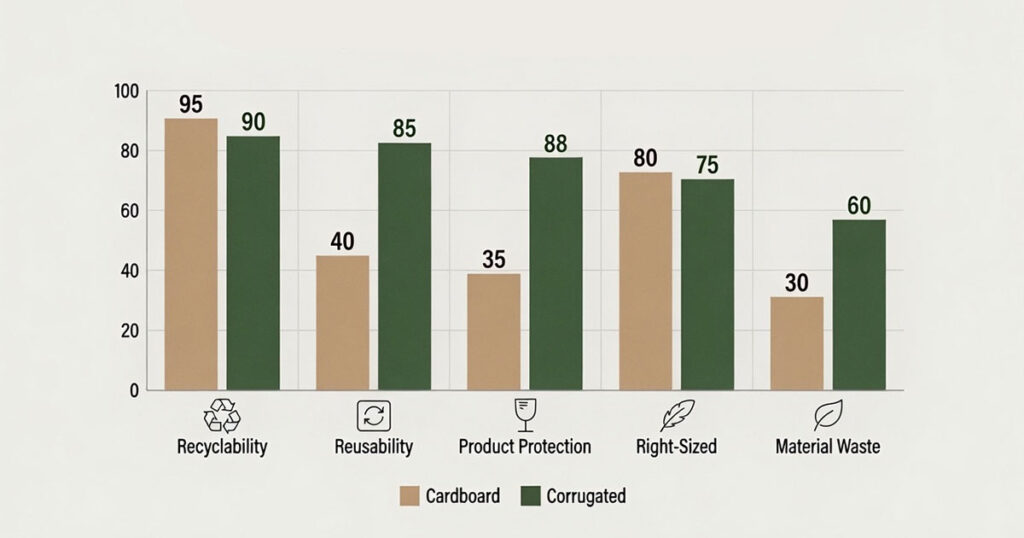
A better approach is to choose packaging that is:
- Right-sized for the product
- Strong enough for delivery
- Easy for customers to recycle
- Not overdesigned
- Not filled with unnecessary material
- Suitable for the product’s actual use
If you want a more natural packaging look, custom kraft packaging boxes may also be worth considering.
Recycling and Sustainability: What UK Businesses Should Know
Both cardboard and corrugated packaging can be part of a more sustainable packaging approach when they are clean, dry, right-sized, and not heavily mixed with non-paper materials.
According to GOV.UK waste statistics, paper and cardboard had the highest UK packaging recycling rate in 2024 at 86.4%. You can review the official source here: GOV.UK UK statistics on waste.
That is a strong reason why paper-based packaging is still important for UK businesses.
But the material alone is not the full story.
A box can be paper-based and still be wasteful if it is too large, overfilled, overprinted, or made with unnecessary layers.
A better sustainability approach is to choose packaging that is:
- Right-sized for the product
- Strong enough to prevent damage
- Easy for customers to recycle
- Not mixed with unnecessary plastic
- Not heavily contaminated
- Not overdesigned with unnecessary finishes
- Clear about disposal instructions
Recycle Now says cardboard boxes and online delivery boxes can be recycled, but corrugated cardboard should have tape, polystyrene, and plastic inserts removed where possible. You can check their guidance here: Recycle Now cardboard recycling guidance.
That means businesses should not only think about the box. They should also think about tape, inserts, filler, labels, windows, and coatings.
What About Sticky Tape, Labels, and Inserts?
A clean cardboard or corrugated box is usually easier to recycle than a box covered in mixed materials.
Tape is a common issue. Recycle Now advises removing loose strands of sticky tape from cardboard boxes where possible because sticky tape itself is not recyclable. You can read their guidance here: Recycle Now sticky tape guidance.
For businesses, this does not mean every box has to be perfect. It means packaging should be designed to make recycling easier for the customer.
Helpful choices include:
- Use the right amount of tape
- Avoid unnecessary plastic inserts
- Use paper-based inserts where suitable
- Add simple recycling instructions
- Keep packaging clean and dry
- Avoid heavy plastic lamination if recyclability matters
Simple recycling messages can help customers dispose of packaging correctly.
Examples include:
- Flatten before recycling
- Remove non-paper inserts before recycling
- Keep dry and recycle with cardboard
- Check local recycling guidance
For businesses trying to improve packaging sustainability, small details like this can improve the customer experience and support better disposal.
Cardboard, Corrugated Boxes, and EPR
UK businesses should also be aware of Extended Producer Responsibility for packaging, often called EPR.
GOV.UK explains that if an organisation is affected by EPR for packaging, it may need to report packaging data and pay fees based on that data. You can check the official guidance here: GOV.UK EPR packaging guidance.
This does not mean every business has the same responsibility. But it does mean packaging records and material choices are becoming more important.
If your business orders packaging regularly, it is useful to keep basic records such as:
- Packaging type
- Material used
- Box size
- Order quantity
- Packaging weight
- Supplier details
- Whether inserts are used
- Whether packaging is printed or plain
GOV.UK also provides guidance on packaging data collection here: how to collect packaging data for EPR.
This section is not legal advice. Always check official guidance or speak to a compliance expert if you are unsure.
Which One Costs More?
The price depends on the size, material, printing, order quantity, and box style.
In many cases, simple cardboard boxes can cost less because they use less material and are often used for lighter products. Corrugated boxes may cost more because they provide extra strength and protection.
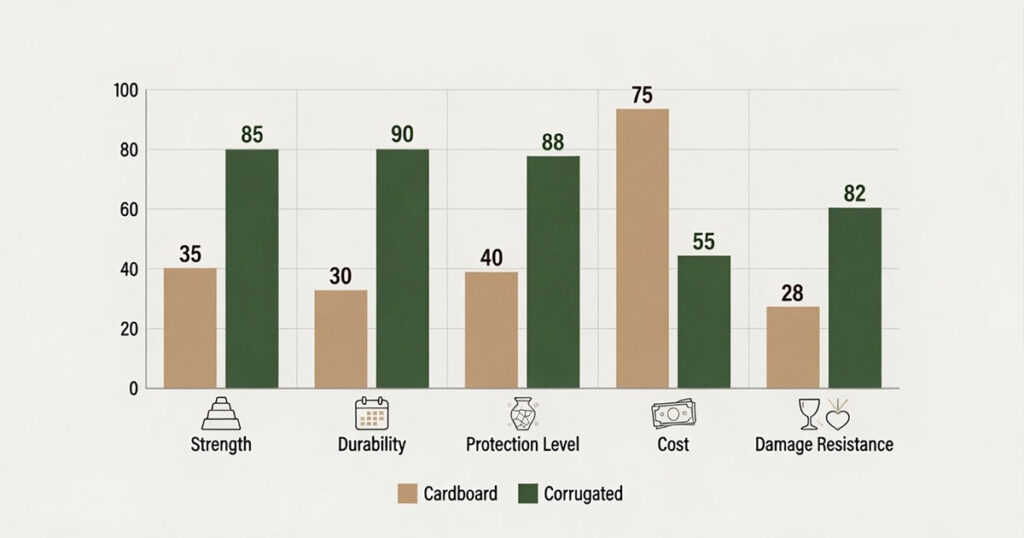
However, cheaper is not always better.
If a low-cost cardboard box does not protect the product properly, you may end up paying more through damaged products, returns, complaints, and replacement deliveries.
For shipping, fragile products, or ecommerce orders, corrugated packaging can be a better investment because it helps reduce damage and improves customer experience.
The best choice is the one that fits your product, protects it properly, and supports your brand.
Detailed Cost Comparison: Cardboard vs Corrugated Boxes
Cost is not only about the price per box.
The real cost includes product protection, damage rates, returns, storage, shipping, printing, and customer experience.
A cardboard box may be cheaper upfront, but if it fails during delivery, the final cost can be higher. A corrugated box may cost more upfront, but it can reduce product damage and give a better customer experience.
Here are the main cost factors:
| Cost Factor | Cardboard Boxes | Corrugated Boxes |
|---|---|---|
| Material Use | Often lower for light packaging | Higher because of fluted structure |
| Printing | Good for detailed full-colour retail print | Good for logos, ecommerce branding, display, and shipping information |
| Protection | Basic protection for light products | Better protection for delivery and storage |
| Damage Risk | Higher if used for shipping heavy or fragile goods | Lower when the right strength is chosen |
| Best Value | Retail shelves and lightweight product boxes | Ecommerce, shipping, storage, and fragile products |
The cheapest option is not always the smartest option.
The best value comes from matching the box to the product. If the product is light and sits on a shelf, cardboard may be the best value. If the product is being shipped, corrugated packaging usually gives better value because it protects the product during the journey.
How to Reduce Packaging Costs Without Choosing the Wrong Box
You do not need to choose weak packaging to reduce cost.
There are better ways to keep packaging costs under control.
Use the Right Size
Oversized boxes use more material and often need more filler. A right-sized box can reduce cost and improve presentation.
Choose the Right Strength
Do not pay for double wall corrugated if single wall is enough. But do not use cardboard for a product that needs shipping protection.
Keep Printing Practical
A simple logo and clean design can look professional without increasing costs too much.
Use Inserts Only When Needed
Inserts are useful for fragile products, but not every product needs them. Use inserts when they improve safety or presentation.
Order a Sensible Quantity
Bulk orders can reduce the cost per box, but ordering too many can create storage problems if your design or product size changes.
Plan Ahead
Rush orders may cost more. Ordering early gives you more options and avoids unnecessary pressure.
For more bulk ordering advice, read our guide on custom corrugated boxes wholesale.
Cardboard vs Corrugated Decision Table
Here is a practical decision table you can use before ordering.
| Your Situation | Better Choice | Why |
|---|---|---|
| You need a product box for a lightweight retail item | Cardboard | Good print surface and enough strength for shelf display |
| You are shipping ecommerce orders | Corrugated | Stronger protection during courier handling |
| You need packaging for glass jars or candles | Corrugated with inserts | Better cushioning and movement control |
| You need a printed sleeve or small folding carton | Cardboard | Neat finish for lightweight presentation |
| You need subscription packaging | Corrugated mailer box | Combines protection with unboxing experience |
| You need shelf-ready display packaging | Corrugated display box | Stronger support for multiple products |
| You need outer packaging for a fragile product | Corrugated | Better protection than standard cardboard |
When Should You Use Cardboard Boxes?
Cardboard boxes are a good choice when your product is lightweight and does not need heavy protection.
Use cardboard boxes for:
- Lightweight retail products
- Cosmetic packaging
- Product sleeves
- Folding cartons
- Small food boxes
- Soap boxes
- Supplement boxes
- Display packaging
- Products kept on shelves
Cardboard is also a good choice when you want a neat printed finish and the product will not go through rough delivery conditions.
When Should You Use Corrugated Boxes?
Corrugated boxes are a better choice when your product needs strength, protection, or shipping support.
Use corrugated boxes for:
- Ecommerce orders
- Courier deliveries
- Fragile products
- Heavy products
- Food delivery packaging
- Subscription boxes
- Gift boxes
- Storage boxes
- Shipping boxes
- Products that need inserts
- Products that may be stacked
For businesses that need packaging for delivery, storage, or product protection, corrugated packaging boxes are usually the safer option.
Simple Buying Guide: Which Box Should You Choose?
Here is a simple way to decide.
Choose cardboard boxes if:
- Your product is light
- Your product is mainly for retail display
- You need smooth printing
- Your packaging does not need heavy protection
- The box will not be used as the main shipping box
Choose corrugated boxes if:
- Your product will be shipped
- Your product is fragile
- Your product is heavy
- You need stronger protection
- You want ecommerce packaging
- You need inserts or dividers
- You want branded delivery packaging
- Your products will be stacked or stored
If you are still unsure, think about the product journey. Will the box only sit on a shelf, or will it travel through delivery and handling? If it needs to travel, corrugated is usually the better choice.
Industry-by-Industry Packaging Guide
Different industries need different packaging. The right choice depends on what the customer expects and what the product needs during storage, display, or delivery.
Cosmetics and Skincare
Cardboard is often used for individual cosmetic cartons because it prints well and gives a clean retail finish.
Corrugated packaging is useful when cosmetics are shipped, bundled, or sold as gift sets. Bottles, jars, and fragile cosmetic containers often need inserts or stronger outer packaging.
Best approach: cardboard for the product carton, corrugated for ecommerce delivery or gift sets.
Supplements and Medicines
Cardboard is commonly used for lightweight supplement cartons because the packaging needs space for product details, dosage, ingredients, and branding.
Corrugated boxes may be used for bulk shipping, ecommerce orders, wholesale supply, or outer packaging.
Best approach: cardboard for individual packs, corrugated for shipping and storage.
Food and Takeaway
Cardboard can work for dry food cartons, sleeves, and light retail food packaging. Corrugated is better for pizza boxes, delivery boxes, bakery boxes, burger boxes, and packaging that needs more structure.
Best approach: choose based on food type, grease risk, heat, handling, and delivery method.
Clothing and Fashion
Light clothing items may use cardboard sleeves, paperboard boxes, or corrugated mailers depending on the brand style.
For ecommerce clothing orders, corrugated mailer boxes often give better protection and presentation than simple paperboard packaging.
Best approach: corrugated mailers for ecommerce, cardboard boxes for lighter retail presentation.
Candles and Glass Products
Candles and glass items need careful packaging. A cardboard carton may look good, but the product may still need corrugated protection during shipping.
Best approach: cardboard inner box plus corrugated outer box or corrugated mailer with inserts.
Retail and Promotional Products
Cardboard works well for small lightweight products that sit on shelves. Corrugated display boxes work better when products need to be grouped, displayed, or supported in larger quantities.
Best approach: cardboard for individual cartons, corrugated for counters, displays, and shelf-ready packaging.
How to Test Which Box Is Right Before Ordering in Bulk
Before placing a large order, test your packaging.
You do not need a complicated lab test for every product. Even simple checks can help you avoid mistakes.
Try these checks:
- Pack the product and shake the box gently to check movement
- Stack a few packed boxes to see if the lower box bends
- Check whether the product touches the box walls
- Check whether inserts hold the product in place
- Review how the box looks when opened
- Check whether the design is easy to read
- Ask whether the customer can recycle the packaging easily
For ecommerce, test the full delivery experience. Pack the product the way your team will pack it. Then look at the box as if you were the customer.
Does it feel strong? Does it look professional? Is the product safe? Is there too much empty space? Is the opening experience good?
This type of practical testing can save money before you order hundreds or thousands of boxes.
Questions to Ask Your Packaging Supplier
Before choosing between cardboard and corrugated packaging, ask your supplier the right questions.
- Which material is better for my product weight?
- Will this box survive courier delivery?
- Do I need single wall or double wall corrugated board?
- Should I use inserts or dividers?
- Can this box be printed with my artwork?
- What is the minimum order quantity?
- What affects the price?
- Can the box be supplied flat-packed?
- How long will production take?
- Can I reorder the same design later?
A good supplier should not just sell you a box. They should help you choose packaging that fits the product and protects it properly.
For more supplier guidance, read our article on how to choose a corrugated box manufacturer in the UK.
Common Packaging Mistakes Businesses Make
Most packaging mistakes happen because businesses choose too quickly.
Here are the main mistakes to avoid.
Choosing by Looks Only
A box may look good but still fail during delivery. Always consider strength and product protection.
Choosing by Price Only
The cheapest box can become expensive if it causes damaged products and returns.
Ignoring Product Movement
If the product moves inside the box, damage risk increases. Use the right size or inserts where needed.
Using One Box for Every Product
Different products need different packaging. A light soap box and a glass candle box should not be treated the same way.
Overpacking the Product
Too much packaging wastes material and can make customers feel the brand is careless.
Not Thinking About the Customer
The box should be easy to open, practical to dispose of, and suitable for the product experience.
Final Checklist Before You Decide
Use this checklist before choosing cardboard or corrugated boxes.
- Is the product light or heavy?
- Is it fragile?
- Will the box be shipped?
- Will it sit on a retail shelf?
- Does it need detailed printing?
- Does it need to be stacked?
- Does it need inserts?
- Will the customer open it at home?
- Is recyclability important to the brand?
- Does the box support the product journey?
If most answers point to shelf presentation, choose cardboard. If most answers point to shipping, strength, and protection, choose corrugated.
Common Mistake: Choosing Packaging Only by Price
One common mistake is choosing the cheapest box without thinking about how the product will be used.
A cheap box may look fine at first, but if it does not protect the product, it can cost more in the long run.
Poor packaging can lead to:
- Product damage
- Customer complaints
- More returns
- Bad reviews
- Replacement costs
- Poor brand impression
Good packaging should protect the product, look suitable for your brand, and make the customer feel confident about the order.
Final Thoughts
Cardboard boxes and corrugated boxes both have their place. Cardboard boxes are great for lightweight retail packaging, product display, and clean printed presentation. Corrugated boxes are better for shipping, ecommerce, storage, food delivery, fragile products, and stronger protection.
The right choice depends on your product, its weight, how it will be delivered, and how much protection it needs.
If your business needs packaging mainly for display, cardboard may be enough. If your product needs to be shipped, stacked, stored, or protected during delivery, corrugated packaging is usually the better choice.
Corrugated Packaging Boxes: Complete Guide for UK Businesses
For custom packaging made around your product size, strength, and branding needs, explore custom corrugated boxes in UK and request a free quote from PackagingX.
FAQs
Can I use cardboard boxes inside corrugated shipping boxes?
Yes. Many businesses use cardboard as the inner retail product box and corrugated packaging as the outer shipping box. This gives the product a clean retail look while still protecting it during delivery.
Are corrugated boxes more expensive than cardboard boxes?
Corrugated boxes can cost more because they use a fluted structure and provide more protection. However, they can be better value for shipping, fragile products, ecommerce orders, and heavier items because they reduce the risk of damage.
Are cardboard boxes recyclable?
Cardboard boxes are generally recyclable when they are clean, dry, and not heavily coated or contaminated. Always check local recycling guidance, especially for food-contaminated packaging or boxes with mixed materials.
Are corrugated boxes suitable for luxury packaging?
Yes. Corrugated boxes can be used for premium packaging when they are custom printed, well-sized, and designed with inserts or inside printing. They are often used for candles, cosmetics, gift sets, and subscription boxes.
Which box is better for candles?
For candles, corrugated packaging is usually better for shipping because candles are often fragile and heavy for their size. A cardboard inner box can still be used for retail presentation, but the outer shipping box should offer stronger protection.
Which box is better for food delivery?
Corrugated boxes are often better for food delivery because they provide stronger structure for products like pizza, burgers, bakery items, cakes, and takeaway food. The exact choice depends on the food type, grease risk, heat, and handling needs.
Can both cardboard and corrugated boxes be custom printed?
Yes. Both materials can be custom printed. Cardboard is often better for detailed retail artwork, while corrugated boxes are excellent for ecommerce branding, display boxes, shipping instructions, and logo printing.
What is the best box for fragile ecommerce products?
Corrugated boxes are usually best for fragile ecommerce products. For extra protection, use inserts, dividers, or stronger board to stop the product moving inside the box.
How do I know which packaging material is right for my business?
Start with your product weight, fragility, shipping method, display needs, branding goals, and budget. If the product is light and mainly for shelf display, cardboard may be enough. If it needs delivery protection, corrugated is usually safer.
Are corrugated boxes the same as cardboard boxes?
No, they are not exactly the same. Cardboard is usually single-layer paperboard, while corrugated boxes have a fluted layer between liners. This makes corrugated boxes stronger and better for shipping, storage, and product protection.
Which is stronger, cardboard or corrugated?
Corrugated boxes are usually stronger because of the fluted middle layer. This gives them better cushioning and support, especially for products that need to be shipped, stacked, or handled during delivery.
Are cardboard boxes good for shipping?
Cardboard boxes can work for very light items, but they are not usually the best choice for shipping fragile or heavier products. Corrugated boxes are better for ecommerce, courier delivery, and product protection.
Can corrugated boxes be printed?
Yes, corrugated boxes can be printed with your logo, brand colours, product details, QR codes, and handling instructions. They are a good choice for branded ecommerce packaging, shipping boxes, mailer boxes, and retail display boxes.
Which box is better for ecommerce?
Corrugated boxes are usually better for ecommerce because they offer more protection during delivery. They can also be customised with printing, inserts, and branded designs to improve the unboxing experience.
Which box should I choose for lightweight retail products?
For lightweight retail products, cardboard boxes may be enough. They are good for shelf presentation, product details, and clean printing. If the product also needs to be shipped, you may need corrugated outer packaging as well.